

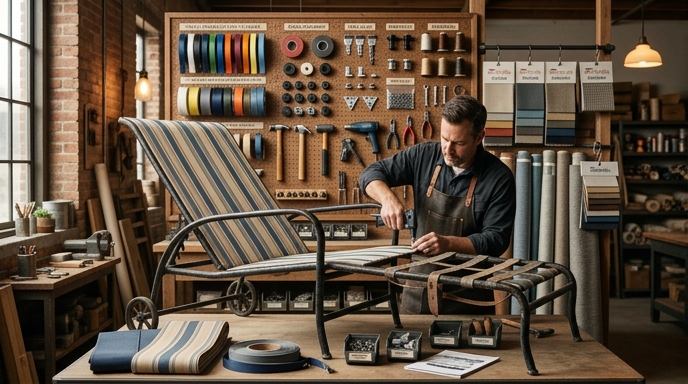
A sagging patio seat changes the whole feel of a space. What once looked crisp and comfortable starts to feel tired, even if the frame itself is still solid. That is why outdoor chair sling replacement is often the smartest upgrade – it restores comfort, refreshes the look of your furniture, and lets you keep the pieces you already love.
For many homeowners, the frame is not the problem. Premium outdoor furniture is built to last, and brands like Tropitone, Brown Jordan, Winston, Woodard, Homecrest, and Hampton Bay often deserve a second life rather than a trip to the curb. Replacing the sling instead of the entire chair is a practical way to protect your investment while bringing refined outdoor living back to your deck, patio, lanai, or poolside seating area.
Why outdoor chair sling replacement makes sense
New patio sets are expensive, and matching older pieces can be frustrating when a collection has been discontinued. If your chair frame is stable, free from severe structural damage, and still suits your space, replacing the sling is usually the more elegant solution.
A fresh sling can improve both appearance and performance. You get cleaner lines, firmer support, and the opportunity to update the fabric color or pattern. It also gives you more control over the finished look. Instead of settling for whatever is available in a showroom, you can choose a fabric that complements your cushions, umbrella, dining table, or surrounding architecture.
There is also a durability advantage. Quality replacement slings are designed for outdoor exposure and, when measured correctly, provide a tailored fit that feels intentional rather than improvised. Done well, the result looks like restored furniture, not patched furniture.
When to replace the sling instead of the chair
Not every chair is a good candidate for restoration, so it helps to evaluate the frame before ordering anything. If the metal frame is bent, badly cracked, or heavily corroded at stress points, a new sling will not solve the underlying issue. The frame still has to carry weight safely and evenly.
But if the problem is faded fabric, torn mesh, stretched seating, or mildew-stained slings that no longer clean up well, replacement is often exactly what is needed. This is especially true for patio dining chairs, high-back sling chairs, swivel rockers, and chaise lounges with quality aluminum frames.
The best restoration projects usually have three things in common. The frame is structurally sound, the owner likes the original furniture style, and the cost of replacement parts is meaningfully lower than buying new furniture of similar quality. That combination is where sling replacement offers real value.
How outdoor chair sling replacement works
Most sling chairs use a fabric panel that slides into channels on each side of the frame. A flexible rod, often called spline or a sling rail insert, helps secure the fabric inside those rails. Once installed and tensioned, the sling forms the seat and back support.
That design sounds simple, but accurate sizing matters. Even a small measuring error can affect fit, tension, and appearance. Too narrow, and the sling may shift or sit loosely. Too wide, and installation can become difficult or impossible. Length matters just as much, especially on chairs with shaped backs or separate seat and back panels.
This is where custom sizing becomes especially valuable. Many outdoor furniture models vary by brand, production year, and frame style. A one-size-fits-all approach can work for some basic chairs, but it is rarely the best path for a polished result.
One-piece vs. two-piece slings
Some chairs use a single continuous sling from the upper back to the front seat edge. Others use a two-piece design with separate panels for the back and seat. Chaise lounges may also use one or two panels depending on the frame construction.
Knowing which style you have is the first step in ordering correctly. It affects both the measurements and the installation method. If you are replacing an existing sling, the old panel often provides clues, but worn fabric can stretch over time, so frame-based measuring is typically more reliable.
Measuring for the right fit
The quality of your outdoor chair sling replacement depends heavily on measurement accuracy. This is not the step to rush.
In general, sling width is measured from the inside of one sling rail to the inside of the other. Sling length is measured along the channel area based on the chair design, not loosely across old fabric that may have distorted with age. On some chairs, the top and bottom attachment areas, hems, and rail depths also matter.
Curved frames deserve extra attention. A chair can look symmetrical while still having small contour differences that affect how the sling sits once tension is applied. If your furniture is from a recognized brand, model-specific guidance can save time and reduce guesswork.
Samples can help with appearance, but they do not replace careful measuring. A beautiful fabric is only beautiful on the right-fitting sling.
Choosing the right sling fabric
Fabric selection is where restoration becomes design. The right choice should complement your outdoor setting, but it also needs to support how the furniture is used.
For poolside seating, quick-drying sling fabric with reliable UV resistance is often the priority. For dining chairs on a covered patio, visual texture and color coordination may matter more. If the chairs get full afternoon sun, fading resistance moves higher on the list.
Some homeowners want to match the original look closely, especially when restoring a full set. Others prefer a fresh update that gives existing frames a more current feel. Both approaches work. It depends on whether your goal is preservation, redesign, or a little of both.
Neutral tones tend to offer staying power, especially in refined outdoor spaces where longevity matters as much as first impression. Patterned fabrics can be striking, but they are usually best when the surrounding setting is simple enough to let the furniture breathe. The upscale result comes from balance, not excess.
Installation: DIY or professional?
Many homeowners can handle sling installation successfully, especially if they are comfortable with basic hand tools and patient with detail work. But outdoor chair sling replacement is not always effortless, particularly on older frames where end caps, rivets, or rails need attention.
A proper installation may involve removing old spline, cleaning channels, checking end caps and glides, inserting the new sling evenly, and using heat to help the fabric relax into place. Tension is part of the process. A newly installed sling may feel tight at first, then settle correctly once exposed to warmth and use.
The trade-off is straightforward. DIY installation can save money and give you more control over timing, but it requires care. Professional help can reduce hassle, especially for larger sets or premium branded furniture, but it adds labor cost. For many homeowners, the best path depends on how many chairs are involved, how complex the frame is, and how confident they feel working with the hardware.
Don’t overlook the supporting parts
A sling replacement project often goes better when you address the small components at the same time. Worn spline, cracked end caps, missing rivets, damaged glides, or chipped frame finish can make a refreshed sling look incomplete.
This is one reason specialized suppliers matter. Patio furniture restoration is rarely just about fabric. It is an ecosystem of fit, finish, and compatibility. If your project needs sling fabric, hardware, touch-up materials, or model-specific replacement parts, it helps to work with a source that understands the category in detail rather than treating it like generic outdoor seating.
Chair Slings Store is built around that exact need, which gives homeowners a more confident path from measuring to installation.
What to expect after replacement
Once installed, a new sling should feel supportive, clean, and visually tailored to the frame. The chair should sit level, the fabric should track evenly in the rails, and the overall piece should look renewed rather than simply repaired.
You may also notice that your space feels more finished. Restored sling chairs tend to sharpen the appearance of a patio set quickly because seating occupies so much visual space. Replacing faded or damaged slings can make the entire outdoor area feel more intentional, even if nothing else changes.
That is the real appeal of sling restoration. It preserves the furniture you chose for a reason while elevating the comfort and appearance you live with every day.
If your frames are still worth keeping, replacing the slings is not just a maintenance task. It is a smart design decision that brings comfort, durability, and effortless sophistication back to outdoor living.
Need measurements before you order? Review our measuring guide for patio slings and see our chair sling installation tips for a smoother replacement process.