

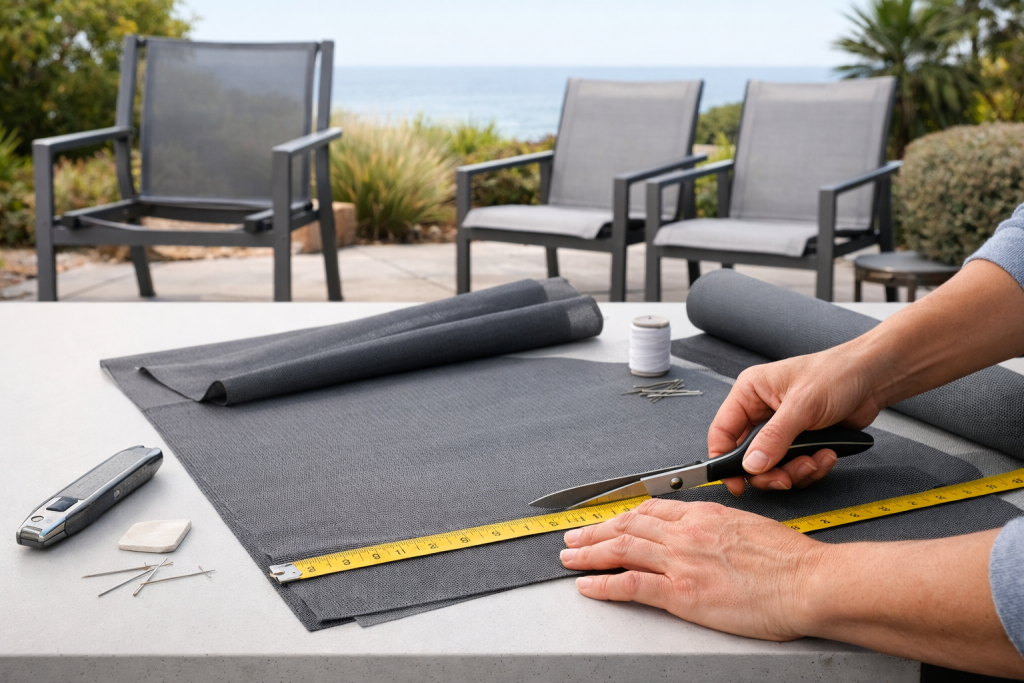
patio chair sling fabric by the yard is exactly what it sounds like: you’re purchasing sling material in continuous yardage, then cutting it to fit your chair frames.
That flexibility matters because patio chairs vary wildly by brand, era, and frame style. Buying pre-cut slings is convenient, but buying by the yard often gives you more control over color, weave, strength, and cost.
Real-world example: if you’re restoring four dining chairs and one chaise lounge, yardage lets you match the set while adjusting lengths for each frame—without paying custom pricing for every single piece.
What is the best type of patio chair sling fabric to buy by the yard for outdoor durability?
For most outdoor settings, the best overall pick is PVC-coated polyester sling fabric (often sold as “vinyl-coated polyester” or “Textilene-style” mesh).
It’s popular because it balances UV resistance, stretch control, comfort, and easy cleaning.
The durability “sweet spot” most homeowners want
When people ask for the “best,” they usually mean:
- Doesn’t fade fast in sun
- Doesn’t sag like a hammock after one season
- Doesn’t trap moisture
- Doesn’t feel like sandpaper
- Cleans easily
PVC-coated polyester typically hits all of these, especially for sunny, humid, or poolside areas.
Why should I choose specific materials for my patio chair sling fabric?
Material isn’t just a label—it’s how your sling will behave outdoors.
Choosing the right material affects:
- How long it lasts (sun + heat + rain are brutal)
- How it feels (soft vs firm support)
- How it fits (some stretch more than others)
- How it looks after a year (fading, fraying, sagging)
If your patio gets harsh afternoon sun, picking a highly UV-stable option can be the difference between “still looks new” and “washed-out and brittle.”
What are the most common materials used for patio chair sling fabric?
Here are the materials you’ll see most often when shopping patio chair sling fabric by the yard:
- PVC-coated polyester mesh (common “sling” standard; great outdoors)
- Vinyl-coated polyester (often used interchangeably with PVC-coated)
- Acrylic fabrics (excellent UV performance, but not always used as traditional sling mesh)
- Polyester blends (varies by manufacturer; check specs carefully)
Actionable takeaway: if the listing doesn’t specify UV and mildew performance, treat it like an indoor fabric—because it might behave like one outside.
What does “textilene fabric” mean for patio chair slings?
“Textilene” is commonly used to describe PVC-coated polyester mesh designed for outdoor seating.
Some people use “textilene” generically (like how people say “Kleenex”), but generally it points to a breathable mesh that:
- lets water pass through
- resists stretching better than cheap mesh
- handles sun exposure more reliably than basic fabric
If you see “textilene” in product names for patio chair sling fabric by the yard, it’s often a good sign—just confirm the specs (UV, tensile strength, and width).
How does UV resistance affect the lifespan of patio chair sling fabric?
UV resistance is the difference between “two seasons” and “many seasons.”
Sunlight breaks down fibers over time. Even before fabric tears, UV damage usually shows up as:
- fading
- stiffening or brittleness
- micro-cracks in coated surfaces
- weakened areas that split under tension
Practical lifespan expectations
- Low UV resistance: can fade and weaken quickly (especially Florida, Arizona, Texas, coastal sun)
- High UV resistance: stays stable longer and holds color better
- UV-stable coatings: help delay cracking and stiffness
If your chairs sit in direct sun daily, UV resistance isn’t optional—it’s the main event.
Why is UV protection important for outdoor sling fabric?
UV protection matters because sling fabric is under tension.
A normal cushion cover can fade and still function. A sling seat that fades often means the fiber structure is weakening too. When it fails, it can fail suddenly—especially at stress points near the rails.
Quick tip: even with UV protection, rotating chairs or using a simple cover when not in use can extend life noticeably.
Why does mildew resistance matter for patio furniture fabric?
Mildew resistance matters because patios aren’t “dry rooms.”
Humidity, pool splashes, rain, and morning dew create moisture cycles that invite mildew. Once mildew embeds into fibers, it can stain and smell—even if you clean it.
Mildew-resistant sling fabric helps by:
- drying faster
- resisting growth in the weave
- preventing long-term odor buildup
If you live coastal or humid (or your chairs sit near landscaping sprinklers), this feature is a must.
How do I measure for replacement patio chair sling fabric?
Measuring is where most DIY sling projects go wrong—but it’s very fixable if you follow a consistent method.
If you’re buying patio chair sling fabric by the yard, you must measure both the frame and the way the sling attaches.
Step-by-step measuring (works for most chairs)
- Identify the attachment type: spline-and-rail, pocket style, or wrap style.
- Measure sling width: measure the inside width between the rails where fabric sits (not outside frame width).
- Measure sling length: measure from the top rail seating area to the bottom rail seating area, following the sling path.
- Add allowances: add extra length for wrapping, pockets, or spline engagement (varies by chair style).
- Confirm fabric width sold online: many sling fabrics come in standard widths; you may need to rotate your cut.
Real-world tip: measure twice with the chair on a flat surface. Chairs can twist slightly over time, and that changes your “true” width.
How can I ensure the new fabric fits correctly after measuring?
Fit is about more than numbers—it’s about tension and alignment.
Here’s how to reduce mistakes:
- Check squareness: if the frame is slightly racked, fix the frame first or your sling will wrinkle.
- Match the old sling pattern: use the old sling as a template if it’s not stretched beyond recognition.
- Account for tension stretch: sling material tightens when installed; if you cut too short, you’ll fight it.
- Mind the rails: some chairs require specific spline size or rail channel depth.
Actionable takeaway: before you cut all pieces, cut and test-fit one sling panel. Then replicate.
How do you remove old patio chair sling fabric before replacing it?
Removal depends on how it’s attached, but the safest approach is slow and methodical.
Typical removal process
- Remove the chair from the patio (you want stable, waist-high working height if possible).
- Inspect the rails for screws, end caps, or channels.
- Loosen fasteners (or remove end caps) before pulling fabric.
- Pull spline gently if it’s a spline-in-rail system. Use a flat tool carefully to avoid scratching the frame.
- Clean the channels once fabric is out (debris causes uneven tension later).
If the fabric is brittle, it may tear as you remove it. That’s normal—just focus on removing the spline and any trapped fragments.
What tools are needed to replace patio chair sling fabric?
You don’t need a full workshop, but the right tools make the job dramatically easier.
Common tools list
- measuring tape
- marker or tailor’s chalk
- heavy-duty scissors or rotary cutter
- spline roller (for spline systems)
- flathead screwdriver or trim tool (gentle prying)
- pliers (for stubborn spline)
- drill/driver (if screws are involved)
- clamps (helpful for alignment)
- heat source (optional): warm sun or heat gun on low can make fabric more pliable
Safety note: if you use heat, go gentle. Overheating can damage coatings or warp plastic components.
When should I consider replacing my patio chair sling fabric?
Replace your sling fabric when you notice:
- sagging that doesn’t rebound
- tears, splitting, or thinning at stress points
- brittle feel or cracking
- persistent mildew stains or odors
- extreme fading paired with weakness
- discomfort (fabric loses supportive tension over time)
If you can press a fingernail into the coating and it flakes, that’s often a sign the fabric is beyond “clean and keep.”
When is it better to call a professional for sling replacement versus DIY?
DIY is great when:
- you have standard chairs
- rails and channels are in good condition
- you’re doing one or two pieces
- you have time to test-fit and adjust
Call a pro when:
- the frame is expensive or hard to replace
- the chair uses proprietary rails/splines
- you’re doing a full commercial set (time + consistency matter)
- the frame needs repair/refinishing first
- you want perfect tension and alignment without trial-and-error
Practical example: A pool deck with 20 chaise lounges is usually a “hire it out” job—one uneven sling becomes obvious fast.
Who can help me install new patio chair sling fabric if I buy it by the yard?
If you’d rather not DIY, look for:
- patio furniture repair shops
- outdoor furniture restoration specialists
- upholstery shops that service outdoor frames
- local businesses specializing in sling replacement
Many shops will install customer-supplied fabric, but some prefer using their own materials to guarantee results. If you’re set on buying patio chair sling fabric by the yard, ask whether they’ll install “customer material” and what their policy is for fit issues.
Who offers services for custom-cut patio chair sling fabric?
Custom-cut services are typically offered by:
- specialty patio sling retailers
- local repair shops
- some upholstery/workroom businesses
Custom cutting is especially helpful when you have mixed chair styles, odd widths, or want a consistent pattern alignment across multiple chairs.
Where can I buy patio chair sling fabric by the yard online?
You can find patio chair sling fabric by the yard through:
- specialty patio furniture repair suppliers
- large fabric marketplaces
- outdoor furniture parts retailers
- some brand-adjacent distributors
What to look for in online listings
- fabric width (common ordering mistake)
- UV rating or “UV stabilized” mention
- mildew resistance notes
- weight/tensile strength (if provided)
- return policy (yardage can be tricky to return)
Where are the cheapest places to buy patio chair sling fabric by the yard?
“Cheapest” can mean two different things:
- lowest price per yard today
- lowest cost per year because it lasts longer
Discount marketplaces may offer low per-yard pricing, but durability specs can be vague. If your climate is harsh, a slightly higher-quality fabric often wins financially over time.
Actionable takeaway: compare price only after you confirm width, UV performance, and whether it’s truly outdoor sling mesh (not generic mesh).
What is the typical price range for patio chair sling fabric per yard?
Pricing varies by width, brand, coating quality, and pattern, but a typical range is:
| Quality tier | Typical per-yard range | Best for |
|---|---|---|
| Budget | $10–$20 | shaded patios, light use |
| Mid-range | $20–$35 | most homes, pool areas |
| Premium | $35–$60+ | intense sun, commercial feel |
If you’re redoing multiple chairs, yardage can be cost-effective—especially when you can plan cuts to reduce waste.
Where can I find reviews for online retailers selling sling fabric?
Good places to check reviews:
- the retailer’s product page (look for photo reviews)
- Google reviews for the shop name
- Trustpilot (when available)
- Better Business Bureau profiles (for some retailers)
- forums and patio furniture DIY communities
Tip: search the retailer name + “return policy” + “sling fabric” to see how they handle common issues like color mismatch, width confusion, or shipping damage.
Who manufactures high-quality patio chair sling fabric?
High-quality sling fabric is typically produced by established performance textile manufacturers (often specializing in outdoor mesh, shade mesh, or coated technical fabrics).
When you’re evaluating quality, the manufacturer name can matter—but the specs matter more:
- UV stabilized coating
- consistent weave and coating thickness
- strong edge performance under tension
- colorfastness and fade resistance
If the listing doesn’t disclose a manufacturer, rely on measurable specs and verified buyer feedback.
Practical buying guide: choosing the “right” sling fabric by the yard
When shopping patio chair sling fabric by the yard, use this quick checklist:
- Outdoor-rated? explicitly says outdoor, patio, sling, or UV stabilized
- Mesh openness? more open = cooler and faster drying
- Color and heat: darker colors get hotter in direct sun
- Pattern matching: stripes or repeats require extra yardage
- Width planning: confirm you can cut your sling width from the fabric roll width
- Installation method: confirm compatibility with rails/splines/pockets
Installation basics: what the process feels like (so you’re not surprised)
Installing sling fabric is usually a “steady pressure” job, not brute force.
You’ll typically:
- prep and clean the rails/channels
- align the fabric straight
- secure one side, then tension the other
- finish ends, trim, and re-cap
If it feels impossible, the most common causes are:
- cut length too short
- wrong spline size
- frame out of square
- fabric too stiff because it’s cold (warm it slightly)
For deeper material performance details (UV exposure, durability factors, and outdoor textile guidance), explore this resource: Sunbrella Outdoor Fabric Resources.
Need help choosing the right patio chair sling fabric by the yard or want a professional-quality replacement? Visit American Slings to explore sling options and support for your patio furniture upgrade.
Frequently Asked Questions
Quick answers about measuring, materials, durability, and installation.
How many yards do I need for a set of patio sling chairs?
It depends on chair style, fabric width, and whether you’re pattern-matching. Measure one chair first, add allowances, then multiply by the number of chairs and include extra for errors.
Should I prioritize UV resistance or mildew resistance?
If your chairs sit in strong sun daily, UV resistance is your top priority. In humid or coastal climates, mildew resistance is equally important. Ideally, choose a fabric rated for both.
Can I install sling fabric myself without special tools?
Many homeowners can DIY, but spline systems are much easier with a spline roller. If you don’t have one, the job can become frustrating and lead to uneven tension.
How tight should the sling fabric be after installation?
It should be firm with minimal wrinkles. A slight initial tightness is normal because the fabric will “settle” a bit after use, but it should not feel loose on day one.
When should I hire a professional instead of DIY?
Hire a pro if your frames are high-end, out of square, use proprietary parts, or you need perfect consistency across many chairs. Pros also help when you want faster turnaround with fewer mistakes.