

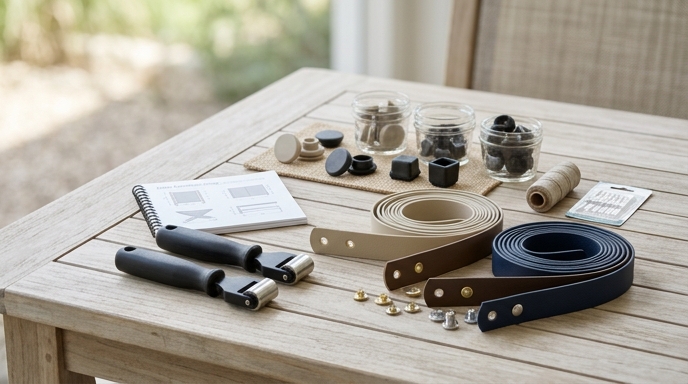
A missing cap on the end of a patio chair rail does more than spoil the look. It can expose sharp metal edges, let parts shift out of alignment, and turn an otherwise elegant seating set into a constant source of small frustrations. That is why outdoor furniture replacement end caps matter. They are modest parts, but they play a real role in comfort, frame protection, and the finished appearance of refined outdoor living.
If your sling chair, chaise lounge, or dining seat has worn, cracked, or missing caps, replacing them is often one of the smartest steps in a restoration project. New end caps can help secure fabric channels, protect the ends of rails, and restore the clean lines that make quality patio furniture feel well cared for. For homeowners trying to preserve a favorite set instead of replacing it, this is exactly the kind of detail that makes the difference.
What outdoor furniture replacement end caps actually do
Outdoor furniture replacement end caps: End caps are typically installed at the ends of chair rails or sling rails, depending on the furniture design. On many sling chairs, they help hold the sling rod and fabric in place while covering the exposed opening of the frame. On other designs, they act as protective finishes for frame ends, reducing wear and making contact points smoother and safer.
Their function depends on the furniture style and manufacturer. Some end caps are mostly cosmetic. Others are structural enough that a broken or missing piece can affect how the sling sits in the rail or how the chair performs over time. That is why replacement should not be treated as a generic hardware purchase. The right cap needs to match the frame profile, dimensions, and intended use.
Why end caps fail over time
Outdoor furniture lives through heat, UV exposure, rain, pool chemicals, and seasonal use. Even premium pieces eventually show wear in the small components first. Plastic end caps can become brittle, especially in intense sun. Repeated movement, stacking, dragging, or pressure on the frame may crack them or knock them loose.
Age is only part of the story. Improper sling tension can place extra stress on rail ends. A chair that has already been repaired with ill-fitting hardware may also put strain on the cap. Sometimes the issue is simply that the original part has been discontinued, and the furniture remains perfectly worth saving if you can identify a compatible replacement.
Signs it is time to replace patio furniture end caps
You do not always need to wait until a part falls off completely. Hairline cracks, loose fit, visible warping, or exposed rail ends are all signs that replacement is due. If your sling fabric shifts more than it should, or if the edge of the rail feels rough when you move the chair, inspect the caps closely.
A visual mismatch can also be reason enough. When you invest in new slings or fresh straps, worn end caps can make the entire set look unfinished. Replacing them helps the furniture feel intentional again, which is especially important when you want your patio, lanai, or poolside area to look polished rather than pieced together.
How to choose the right outdoor furniture replacement end caps
This is where careful matching matters. End caps are not one-size-fits-all, and close enough usually is not good enough. The shape of the rail, the width of the opening, the position of screw holes, and the furniture brand all affect compatibility.
Start with the frame itself. Look at the rail profile – is it rounded, rectangular, or contoured? Then measure the rail width and height as accurately as possible. If the cap fastens with screws, measure hole spacing and note whether the attachment point is centered or offset. If you still have one original cap intact on another section of the chair, use that as your reference.
Brand identification can save time. Many outdoor furniture lines from manufacturers such as Tropitone, Brown Jordan, Homecrest, Woodard, and Winston use distinctive hardware profiles. If you know the manufacturer or collection name, you are already much closer to finding the correct replacement. If you do not, detailed measurements and clear photos usually become the next best path.
Brand-specific fit vs. universal solutions
Some shoppers hope a universal cap will solve the problem quickly. Sometimes that works for simple frame ends, but with sling furniture, precision often matters more than speed. A generic cap may not seat properly, may leave gaps, or may interfere with sling installation. It can also look visibly off on a high-end frame.
Brand-specific or profile-matched parts usually deliver a cleaner fit and better long-term performance. The trade-off is that identifying them can take a bit more effort. Still, if the goal is lasting restoration rather than a temporary patch, proper fit is worth prioritizing.
Outdoor furniture replacement end caps and sling restoration
End caps are often replaced during a sling project because the parts work together. When new slings are installed, old caps may no longer hold securely, or they may crack during removal. Replacing both at the same time helps ensure the fabric sits correctly and the finished chair looks complete from every angle.
This is especially true for older patio furniture with discontinued original components. A fresh sling paired with tired hardware can make the frame look only half restored. New end caps, glides, rivets, and other small parts bring consistency back to the piece. The result feels less like a repair and more like a renewal.
Measuring before you order
Accurate measurement is the step that protects the rest of the process. Measure the outside dimensions of the rail opening and compare them carefully to the replacement part specifications. If the cap inserts into the rail, the insertion dimensions matter just as much as the visible outer size.
It also helps to check how the cap is retained. Some press in, some screw in, and some work with adjacent hardware. If your chair has a damaged rail or distorted opening, account for that as well. A new cap cannot compensate for a bent frame, so the furniture should be structurally sound before installation.
If you are restoring several chairs, inspect each one. Sets often age unevenly. One chair may still have an original cap, while another has a substituted part from an earlier repair. Matching by assumption can lead to ordering the wrong components.
Installation expectations
Replacing end caps is usually straightforward, but not every chair is equally simple. On some designs, the cap can be swapped with basic tools. On others, especially sling seating, the cap may be part of a larger disassembly process involving sling rails, bolts, or fabric channels.
Take your time during removal. Brittle plastic can break apart, and forcing the rail may scratch the frame finish. Clean the area before fitting the new cap so debris does not prevent proper seating. If screws are involved, tighten them securely without overdriving, since too much force can crack the new part.
A careful installation preserves both function and appearance. Patio furniture restoration is often about small details done well, and this is one of them.
Why replacing small parts is worth it
Homeowners often assume that once hardware starts failing, a full furniture replacement is next. In reality, end caps, slings, straps, glides, and fasteners are often the exact components that make restoration practical. Replacing a complete outdoor set can be expensive, and it may still not match the comfort or proportions of the pieces you already enjoy.
Renewing a quality frame with the right components offers a more economical and more tailored result. It also preserves design continuity across your outdoor space. If you already love the scale of your dining chairs or the silhouette of your chaise lounges, replacing the small wear items lets you keep what works and upgrade what does not.
For many homeowners, that is the smarter path to effortless sophistication outdoors. And if you are already refreshing fabrics or hardware, sourcing outdoor furniture replacement end caps from a specialist such as Chair Slings Store can make the process more precise and far less uncertain.
When your patio furniture still has good bones, the best next step is rarely starting over. Often, it is replacing the overlooked parts that restore comfort, protect the frame, and bring the whole setting back into balance.
Need more help with patio furniture repairs? Start with our sling repair FAQ and use our photo submission page to confirm the right replacement parts.
Outdoor Furniture Replacement End Caps FAQ
Find answers about choosing, measuring, and replacing outdoor furniture replacement end caps for patio chairs, tables, chaise lounges, and aluminum frames.