

A replacement sling can look tailored and refined – or fight you the entire way through installation. The difference usually comes down to one detail: knowing how to measure sling rails correctly before you order. If your patio chair frame is still in good shape, accurate rail measurements are what turn a worn seat into a clean, custom fit instead of an expensive guess.
If you want a second reference before ordering, review our Measuring Your Slings guide for additional fit tips and visual examples.
Why sling rail measurements matter
Sling rails are the channels on each side of the chair frame that hold the fabric in place with spline or rods, depending on the design. When those rails are measured correctly, the new sling sits with the right tension, aligns properly with the frame, and restores the chair’s comfort and appearance. When measurements are off, even by a small amount, the sling may sag, bind, wrinkle, or become difficult to install.
This is especially relevant with quality outdoor furniture. Many homeowners are restoring frames from brands they already trust, and those pieces are worth preserving. A precise measurement protects that investment and helps you refresh your outdoor seating with the same sense of comfort and elegance that made the furniture worth keeping in the first place.
What you are actually measuring
When people ask how to measure sling rails, they are often trying to solve one of two problems. They either need the rail length to help identify the correct replacement sling size, or they need to confirm the usable channel length where the sling will sit. Those are related, but not always identical.
In most cases, you are measuring the full length of each sling rail from end to end. On some frames, however, decorative caps, bends, or hardware can make that visual endpoint misleading. The goal is to measure the rail section that corresponds to the sling panel, not any extra frame styling that sits beyond the actual channel.
That is why a tape measure alone is not enough. You also need to pay attention to where the sling enters the rail, where it stops, and whether both sides of the chair are truly the same.
How to Measure Sling Rails Correctly in 7 Essential Steps
Start with the chair on a flat surface where you can easily access both sides. If the old sling is still installed, that is often helpful because it shows you exactly where the fabric is traveling through the rails. If the fabric is torn or badly stretched, do not use the old sling itself as your only reference point. Measure the metal frame.
First, identify the two side rails that hold the sling. These are usually the long aluminum channels running from the front of the seat toward the backrest on a dining chair, chaise, or swivel rocker. On a one-piece sling, the rails often continue from the seat into the back as one continuous path. On a two-piece design, the seat and back may need separate measurements.
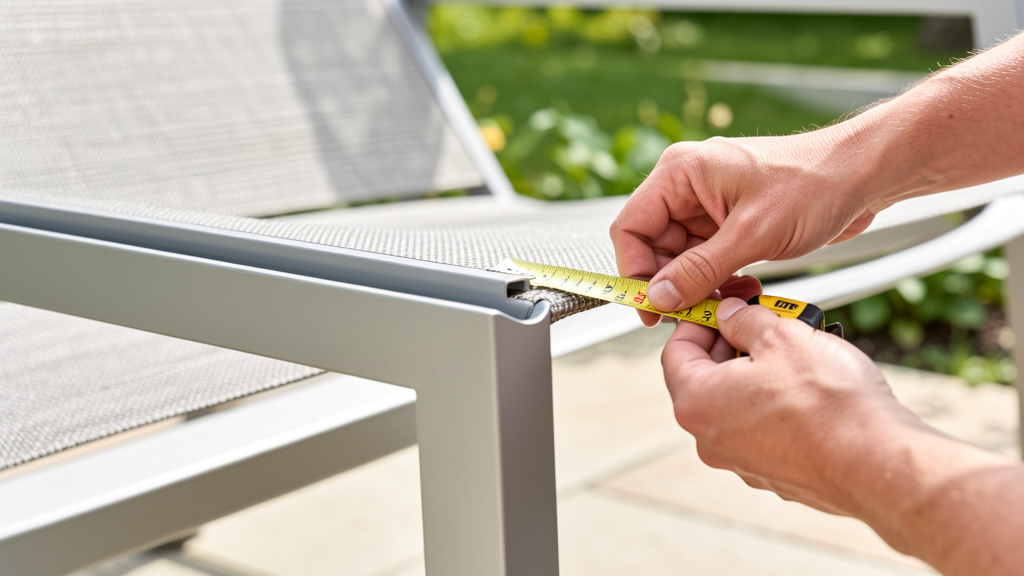
Next, measure one rail from the very top end of the sling channel to the very bottom end of the sling channel. Keep the tape measure straight and close to the rail. Do not follow a curve loosely or let the tape bow away from the frame, because that can add length you do not actually have.
Then measure the second rail the same way. Even if the chair looks symmetrical, do not assume both rails match perfectly. Outdoor furniture can shift slightly over time, and some frames leave the factory with small variations. If the two rails differ, that is a sign to pause and inspect the frame for damage, looseness, or distortion before ordering.
If your frame has top plugs, end caps, or hardware that partially cover the rail opening, measure the channel length, not the removable trim. What matters is the section that accepts the sling and spline. On some chairs, you may need to look closely at where the fabric actually enters and exits the rail to find the true measurement points.
How to measure sling rails on different chair styles
Not every patio chair uses rails the same way, so the measuring method can shift slightly depending on the piece.
Dining chairs and stationary chairs
These are usually the most straightforward. Measure the side rails from channel end to channel end, and then measure the width between rails if your replacement provider asks for it. If the chair uses a two-piece sling, be sure to separate the seat section from the back section rather than treating it as one continuous panel.
Chaise lounges
Chaise slings often have longer rails and may include an adjustable back section. Measure carefully along the actual sling path, especially near pivot points or recline hardware. A chaise frame may look simple at first glance, but those moving sections can change where the usable rail length begins and ends.
Swivel rockers and spring chairs
These can be slightly less forgiving because the frames often have more motion and more hardware. The measuring principle stays the same, but it helps to check that the frame is not twisted before taking dimensions. If one rail appears longer than the other, the issue may be frame alignment rather than measurement error.
Common mistakes when measuring sling rails
The most common mistake is measuring the old fabric instead of the frame. Fabric stretches, shrinks, frays, and distorts with age and weather exposure. Even a sling that still looks intact may no longer reflect the original size.
Another mistake is including decorative frame extensions beyond the actual rail channel. This happens often on upscale outdoor furniture where the frame has a finished, sculpted look. The chair may be elegant, but the sling only fits the functional rail length.
Some homeowners also measure only one side. That can work on a perfectly square frame, but it leaves no room to catch damage or manufacturing variation. Measuring both rails gives you a better read on the chair’s condition and helps avoid surprises during installation.
Rounding too aggressively can also create problems. If your measuring process calls for the nearest fraction of an inch, record that carefully. A small difference may affect fit, especially on tighter sling applications.
How to get the most accurate measurement
Use a metal tape measure rather than a cloth one. A rigid tape stays straighter against the frame and makes it easier to read precise fractions. Good lighting helps more than people expect, especially when you are trying to identify where the rail channel truly starts and ends.
It is also smart to measure twice, then measure once more after a short break. That extra check often catches a skipped fraction or a tape placement error. For premium outdoor furniture, a few extra minutes spent measuring is well worth it. It supports a more polished result and helps preserve the clean lines of the original design.
If the old sling has already been removed, inspect the rails for wear, burrs, or obstructions before measuring. Built-up debris or bent edges can make the rail seem shorter or interfere with installation later. A careful restoration is not just about ordering the right size. It is also about making sure the frame is ready for a fresh, durable fit.
When measuring gets less straightforward
Some chairs have curved rails, unusual arm structures, or older designs from discontinued collections. In those cases, how to measure sling rails may depend on the exact frame style. You may need to distinguish between overall rail length, hole-to-hole spacing, or the visible channel opening.
This is where product-specific guidance matters. A specialized replacement source such as Chair Slings Store can help homeowners move from rough measurements to the right made-to-measure sling without treating a premium patio chair like a generic hardware project. That kind of support is especially valuable when you are restoring branded outdoor furniture and want the finished piece to feel intentional, not improvised.
If a frame is bent, cracked, or badly out of square, measurement alone will not solve the issue. A new sling is designed to fit a sound frame. If the chair structure has shifted, repair may need to come first.
Before you order your replacement sling
Once your rail measurements are recorded, double-check whether your chair uses a one-piece or two-piece sling and whether the replacement requires any additional dimensions, such as width between rails. Keep your notes clear and label them by chair type if you are restoring multiple pieces at once. Patio sets often look uniform, but dimensions can vary between dining chairs, swivel chairs, and chaises.
It also helps to think beyond fit alone. A well-measured sling is the foundation, but fabric choice, color, and finish are what complete the look. When the sizing is right, those style decisions become much easier because you can focus on creating a cohesive outdoor setting with confidence.
A carefully measured chair frame gives your restoration project its best chance of looking polished from the start. Take your time, trust the frame more than the worn fabric, and let precision guide the process – your outdoor space will feel better for it.