

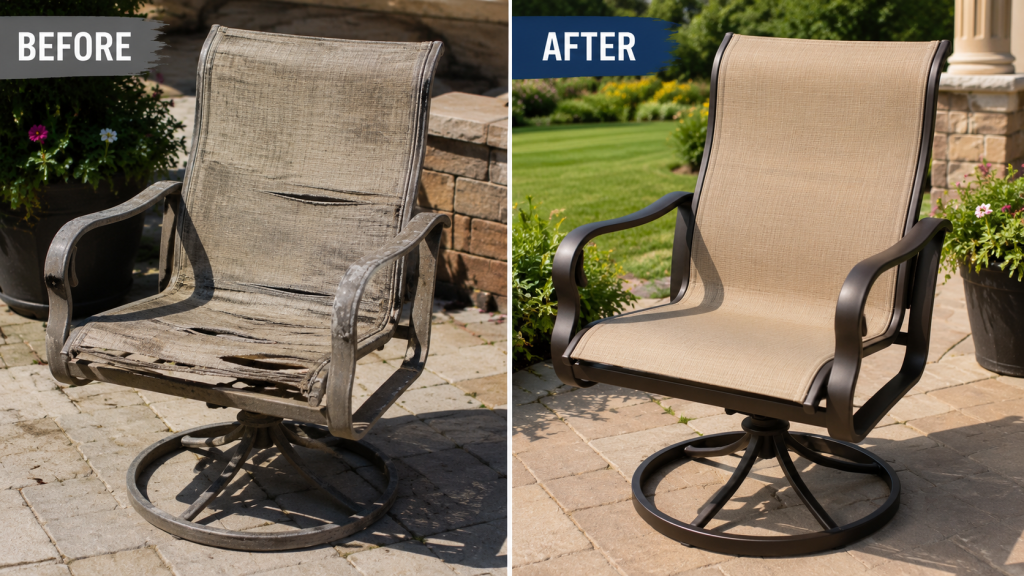
A sun-faded sling, a cracked vinyl strap, and a frame with good bones can make an entire patio look tired. That is why patio chair restoration before after results are so compelling – the change is not only visual. A well-restored chair feels better to sit in, looks more refined in the space, and often saves homeowners from replacing an entire outdoor set they still love.
For many outdoor furniture owners, the “before” stage is easy to recognize. The fabric may sag. The straps may split. Finishes start to chalk, scuff, or show oxidation. Yet the frame itself is often structurally sound, especially with quality brands built to last. In those cases, restoration is not a stopgap. It is a practical upgrade that brings comfort, durability, and effortless sophistication back to the patio.
What patio chair restoration before after really means
The biggest misconception is that restoration is just cosmetic. Fresh fabric and paint certainly improve appearance, but the real value goes deeper. New slings restore tension and support. New straps improve stability and seating comfort. Replacement glides, end caps, rivets, and other hardware help the chair function properly again.
That is what creates a true before-and-after transformation. The chair does not simply look newer. It performs like outdoor furniture should – supportive, polished, and ready for everyday use around the pool, on the lanai, or at the dining table.
There is also a financial trade-off worth considering. Full replacement can make sense if frames are bent, rusted through, or poorly made to begin with. But when the frame is still in good condition, restoring a chair is often the more sensible path. You preserve the style you already chose, avoid the disruption of replacing a matching set, and gain the opportunity to update color and material choices to better suit your current outdoor design.
The most common “before” problems homeowners see
Most restoration projects start with one issue, then reveal a few related ones. A torn sling may also expose worn spline. Cracked straps may appear alongside brittle end caps. A chair that feels unstable may only need small hardware components to return to proper function.
Faded slings are one of the most common concerns. Even premium outdoor fabrics endure years of UV exposure, moisture, sunscreen, and regular use. Over time, color loss and stretching can make a chair look older than it is. The frame may still be elegant and durable, but the seating surface no longer matches it.
Vinyl straps tend to show age differently. Instead of fading alone, they can harden, crack, or snap at attachment points. This changes both the look and the comfort of the chair. Once a few straps fail, the furniture quickly shifts from refined outdoor living to something that feels neglected.
Frames are another factor. Powder-coated finishes can chip or dull, especially in coastal climates or high-sun regions. Surface wear does not always mean the chair is beyond saving. In many cases, proper prep and refinishing give the frame a clean, updated look that complements new slings or straps beautifully.
What changes most in the “after”
The strongest patio chair restoration before after examples usually show three improvements at once: cleaner lines, better support, and a more intentional design finish.
Visually, the chair looks tailored again. A new sling sits smooth within the rails. Fresh straps create even spacing and a crisp profile. Updated finishes restore contrast between frame color and seating material. Those details matter because outdoor furniture sets the tone for the whole space. When chairs look worn, the patio feels worn. When they look sharp and coordinated, the entire area feels elevated.
Comfort improves just as much. A stretched sling can feel loose and unsupportive, while a properly fitted replacement offers a firmer, more balanced seat. New straps help distribute weight evenly and reduce that unstable feeling older chairs often develop. This is especially noticeable on dining chairs and chaise lounges where comfort shapes how often the furniture is actually used.
There is also the benefit of customization. The “after” does not have to replicate the original chair exactly. Some homeowners want a close brand-style match to preserve the existing look. Others use restoration as a chance to refresh the palette with updated neutrals, textured weaves, or a more contemporary finish. Both approaches can work. It depends on whether the goal is preservation, redesign, or a bit of both.
Sling replacement vs. strap replacement
Choosing the right restoration path starts with understanding the chair construction. Sling chairs use fabric panels tensioned within the frame. Strap chairs use individual vinyl straps attached across the seat and back. The before-and-after result depends on replacing the correct components with the right fit.
For sling furniture, accurate measurements are essential. Small errors can affect tension, installation, and long-term comfort. When replacement slings are made to fit the frame correctly, the final result looks clean and performs the way it should. If the sling is too loose or too tight, the after will never feel finished.
For strap furniture, width, length, and attachment style all matter. A strap that looks close but is not correct for the chair can create alignment issues or uneven support. The best restored result comes from matching the replacement parts to the frame design, not guessing based on appearance alone.
This is where a specialized source makes a difference. Chair Slings Store is built around this exact process, helping homeowners identify compatible replacement parts, order made-to-measure solutions, and restore quality outdoor furniture with confidence rather than trial and error.
Why measurement and hardware matter in before-and-after results
Homeowners often focus on the visible material, but hardware is what makes the transformation hold up. End caps, rivets, clips, glides, and spline may seem secondary, yet these small parts affect fit, motion, and finish quality.
If a new sling is installed into worn rails with damaged spline, the chair may not sit correctly. If old glides are left in place, the chair can scrape surfaces or feel unstable. If cracked end caps remain, the restored chair still looks incomplete. A polished after result comes from treating the chair as a system, not just replacing the most obvious worn piece.
Measurement has the same importance. Outdoor furniture brands often use distinct frame dimensions, and even chairs that look similar can require different specifications. Precise measuring protects the investment and helps the final chair look custom rather than improvised.
When restoration is worth it – and when it may not be
Restoration is often the best choice when the frame is structurally sound, the original furniture is higher quality, or the homeowner wants to preserve a coordinated set. It is also a smart option when replacement furniture of comparable quality would cost significantly more.
Still, there are cases where restoration may not be the right move. If the frame is badly compromised, if corrosion has weakened the structure, or if multiple major components have failed beyond practical repair, replacement may be more efficient. The key is being honest about the condition of the furniture and the standard you want from the finished result.
For many homeowners, though, the decision comes down to value. Restoring a well-made patio chair often delivers the look of a substantial upgrade without the expense of starting over. It is a more sustainable approach, and it lets you keep furniture that already fits your space.
How to get a better patio chair restoration before after outcome
The best results come from slowing down at the beginning. Identify whether the chair uses slings or straps. Inspect the frame closely for finish wear, cracks, or structural issues. Check the small hardware. Measure carefully. Then choose materials and colors that fit both the furniture and the outdoor setting.
This is also where samples can help. A fabric or strap color that looks right on a screen may read differently in full sun next to your decking, cushions, or pool finish. Taking the time to compare options usually leads to a more refined final result.
And think beyond one chair. If several pieces in the set are showing age, restoring them together tends to create a stronger visual payoff. A single renewed chair can stand out for the wrong reason if everything around it still looks weathered.
The most satisfying before-and-after transformations are not flashy. They are thoughtful. They bring back comfort, restore visual harmony, and make outdoor furniture feel worthy of the space again. When done well, restoration does more than rescue an old chair – it helps your patio look finished, welcoming, and ready to enjoy for many more seasons.
Patio Chair Restoration Before After Results
Explore common questions about Patio Chair Restoration Before After Results, including what improvements you can expect, how long restoration takes, and whether restoring your outdoor chairs is worth the investment.
Patio Chair Restoration Before After Results typically show a dramatic improvement in the chair’s appearance, comfort, and functionality. The restoration may include replacing damaged sling fabric, installing new vinyl straps, repairing loose parts, refinishing the frame, and replacing worn glides or end caps.
The finished chair should look refreshed, feel supportive, and function properly while maintaining the original frame and design.
Restoring old patio chairs is often worthwhile when the frames are structurally strong and made from quality aluminum, steel, or wrought iron. High-quality outdoor furniture frames can remain usable for many years, even when the sling fabric, straps, or finish have become worn.
Restoration can preserve a well-built furniture set while allowing you to update the color, fabric, and overall appearance.
Many patio chair components can be repaired or replaced, including sling fabric, vinyl straps, spline, cushions, glides, end caps, bolts, and hardware. Frames may also be cleaned, repaired, sandblasted, powder-coated, or refinished depending on their condition.
The exact restoration options depend on the chair’s construction, brand, material, and level of damage.
The restoration timeline depends on the number of chairs, the services required, material availability, and whether the frames need refinishing. A simple sling or strap replacement may be completed more quickly than a full restoration involving frame repairs and powder coating.
A professional restoration company can provide a more accurate timeline after inspecting the furniture.
Yes. Restoration is an excellent opportunity to update the look of your outdoor furniture. You may be able to select a new sling fabric, vinyl strap color, cushion pattern, or frame finish.
Coordinating the replacement material with your patio, pool area, umbrella, cushions, and outdoor décor can create more impressive Patio Chair Restoration Before After Results.
Start by evaluating the condition of the frames and identifying every worn component. Choose outdoor-rated materials that are appropriate for sun exposure, moisture, and frequent use.
Accurate measurements, professional installation, durable replacement materials, and proper frame preparation all contribute to better and longer-lasting restoration results.
Some patio sling chairs can be restored as a do-it-yourself project. The process normally requires accurate measurements, properly sized replacement slings, compatible spline, and the correct installation tools.
Professional assistance may be preferable when the frame is damaged, corroded, difficult to disassemble, or needs refinishing.
Give Your Patio Furniture a Fresh New Look
Explore replacement slings, vinyl straps, spline, and patio furniture parts for your next restoration project.