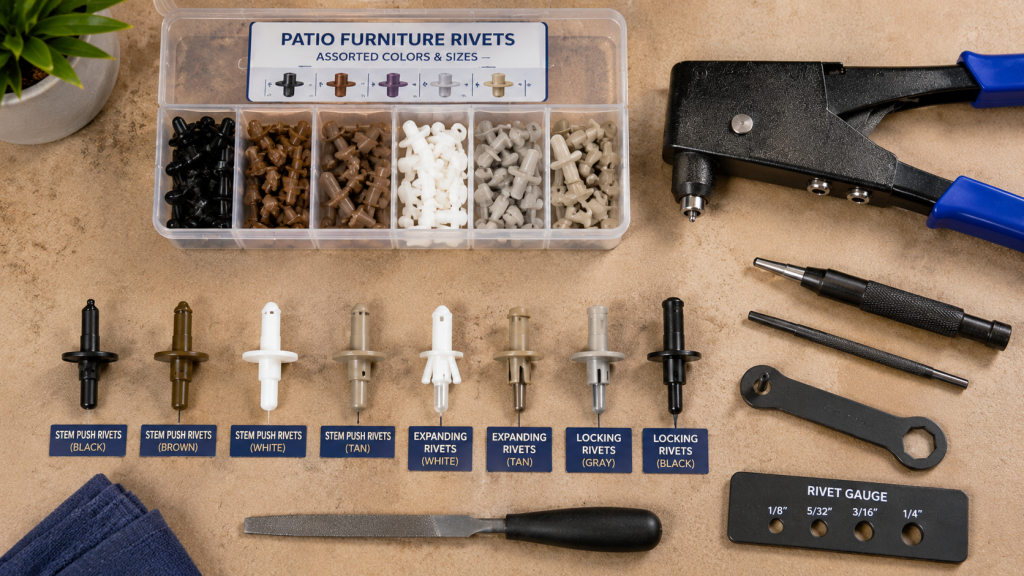

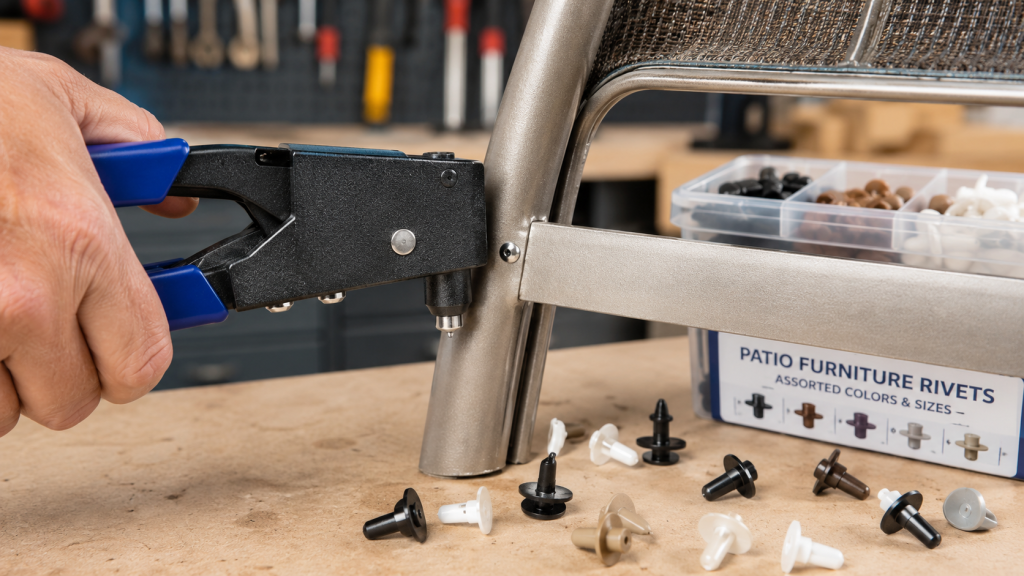
Patio furniture rivets replacement guide.
A loose sling rail, a wobbling arm, or a strap that no longer sits correctly often points to one small part: the rivet. Patio furniture rivets replacement is rarely the most visible part of a restoration, but it is one of the details that determines whether a chair feels refined and secure or simply patched together.
When rivets fail, the temptation is to improvise with a random screw or a hardware-store substitute. That can work in a pinch, but it often changes the fit, stresses the frame, or creates a repair that looks out of place on quality outdoor furniture. If you want your seating to retain its comfort, clean profile, and long-term durability, rivet replacement deserves the same attention you would give new slings, straps, or end caps.
When patio furniture rivets replacement is necessary
Rivets are used across many outdoor furniture designs to fasten straps, secure frame components, or hold moving parts in place. Because they are compact and low-profile, they suit the clean lines found in sling chairs, dining chairs, chaise lounges, and other premium outdoor seating. Over time, though, exposure to moisture, heat, pool chemicals, and daily use can wear them down.
Sometimes failure is obvious. A rivet head may snap off, the body may loosen inside the frame, or a strap connection may detach entirely. In other cases, the signs are more subtle. You may hear a slight clicking when the chair shifts under weight, notice side-to-side play in a joint, or find that one side of the furniture sits differently from the other.
That is usually the moment to stop using the piece until you confirm the cause. A single bad rivet can place extra strain on nearby parts, especially older straps, sling rails, or thin-walled aluminum frames. Replacing the rivet early is often the difference between a straightforward repair and a larger restoration.
Why the right rivet matters
Not all rivets are interchangeable, even if they look close at first glance. Diameter, grip range, head style, material, and intended application all affect the final fit. A rivet that is too small may loosen quickly. One that is too large can distort the hole or damage the frame. A mismatched head may interfere with adjacent parts or leave a visibly uneven finish.
This matters even more on higher-end patio furniture. Brands known for well-engineered outdoor seating often rely on precise hardware sizing. That precision helps preserve alignment, comfort, and the elegant proportions that make the furniture worth restoring in the first place.
Material choice also matters. Aluminum rivets are common because they resist corrosion and pair well with aluminum furniture frames. In some applications, other materials may be used, but the safest route is to match the original hardware as closely as possible. If the furniture lives poolside or in a coastal setting, corrosion resistance becomes even more important.
How to identify the rivet you need
The cleanest approach is to start with the original rivet, even if it has failed. Remove it carefully and inspect the diameter of the hole, the thickness of the materials being joined, and the shape of the head. If the old rivet is too damaged to measure accurately, check the opposite side of the chair or another matching piece from the same set.
For many homeowners, the challenge is not the repair itself but confidence in selecting the correct part. That is where brand-specific restoration suppliers are especially valuable. Patio furniture is not standardized the way many people expect. Two dining chairs that appear similar can use different rivet dimensions, depending on the manufacturer and production era.
If you know the furniture brand, model line, or approximate age, that information can narrow the search considerably. This is particularly helpful for established outdoor furniture names whose replacement parts are not easy to source through general retailers.
Tools and preparation
Patio furniture rivets replacement does not usually require a full workshop, but it does reward careful setup. You want a stable work surface, eye protection, the correct replacement rivets, and the proper installation tool for the specific rivet type. If the old rivet must be drilled out, use a bit sized appropriately for the rivet body, not the head alone.
Before you remove anything, study how the parts are assembled. Take a quick photo if the connection involves straps, clips, or a joint that must return to a specific orientation. On older furniture, it is also wise to inspect surrounding components before installing new hardware. A fresh rivet cannot compensate for cracked straps, worn bushings, or an enlarged frame hole.
That last point is worth pausing on. If the hole has become misshapen from prolonged movement, simply installing another rivet of the original size may not give you a secure hold. In that case, the better solution depends on the frame condition and the furniture design. Sometimes another compatible size works. Sometimes another component should be replaced first. It depends on how much wear is present and whether the frame can still support a clean, stable fastening point.
Removing the old rivet without harming the frame
This is the step where patience pays off. If the rivet is intact, drilling through the center is often the most controlled method. Work slowly so the bit does not wander and scar the finish. Once the head releases, the remaining body can usually be pushed through.
If the furniture has a powder-coated frame, take extra care to protect the surrounding surface. Cosmetic damage may not affect function, but it does compromise the polished look most homeowners want from a restoration. A small hardware repair should not leave the chair looking rough or improvised.
After removal, clear away debris and inspect the hole. It should be clean and round, with no sharp edges that could interfere with the new rivet or contact nearby sling fabric or vinyl straps.
Installing the new rivet for a secure fit
Once you have confirmed the replacement matches the original application, align the parts exactly as they were assembled before. Insert the rivet cleanly through the opening and use the correct setting tool to fasten it. The goal is a snug, secure hold that does not crush the surrounding material.
This is where restraint matters. Over-compressing a rivet can deform the connection or create unnecessary stress. Under-setting it leaves movement in the joint. A proper installation feels tight and intentional, with the connected parts moving only as designed.
After installation, test the furniture gently before returning it to normal use. Sit carefully, shift weight, and check for noise or play. If the repair involves a strap attachment or structural point, compare the restored side with the opposite side to make sure the alignment is even.
Common mistakes to avoid
The most common mistake is treating rivets like generic hardware. Outdoor furniture restoration is more exact than that. Another frequent issue is replacing the rivet but ignoring the reason it failed. If the chair has been stressed by a torn sling, brittle strap, or damaged frame end cap, the new rivet may not last.
It is also easy to underestimate aesthetics. A visibly mismatched fastener can interrupt the clean look of otherwise beautiful furniture. For homeowners investing in refined outdoor living, that detail matters. Good restoration should blend function and appearance so the finished piece feels renewed, not merely repaired.
Finally, avoid forcing a repair when the fit is uncertain. If the dimensions are unclear or the furniture uses brand-specific construction, sourcing the correct part from a specialized patio restoration supplier is usually the better choice. Chair Slings Store is one example of the kind of focused resource that helps homeowners match hardware with more confidence.
A small part with a big role in restoration
Rivets do quiet work. They support the structure, preserve alignment, and help patio seating perform the way it was designed to perform. When replaced correctly, they extend the life of furniture you already enjoy and protect the larger investment you have made in your outdoor space.
A well-kept patio does not depend on replacing everything at once. Often, it comes down to restoring the right details with care, so every chair, chaise, and dining seat continues to offer comfort with effortless sophistication season after season. If a worn rivet is the weak point, fixing it properly is a smart step toward lasting outdoor elegance.
Need more help with patio furniture repairs? Start with our sling repair FAQ and use our photo submission page to confirm the right replacement parts.