


Your outdoor living space is an extension of your home, a place for relaxation and entertainment. The furniture that graces your patio represents a significant investment, both financially and in terms of your lifestyle. To truly protect this investment and ensure its beauty endures for many seasons, proper Patio Furniture Storage is not just a recommendation; it is an essential strategy. Neglecting to store your outdoor pieces correctly can lead to premature wear, fading, rust, and structural damage, diminishing their appeal and functionality.
This comprehensive guide will unveil 8 brilliant strategies for off-season protection, transforming how you preserve your outdoor oasis. We will explore everything from simple covering techniques to advanced storage solutions, ensuring your furniture remains pristine and ready for enjoyment year after year. Discover the secrets to extending the life of your patio furniture and maintaining its aesthetic appeal, no matter the weather. Embrace these expert tips to safeguard your outdoor investment effectively.
Key Takeaways for Optimal Patio Furniture Storage
- Understand the critical importance of off-season protection to prevent damage and extend the lifespan of your outdoor furniture.
- Explore 8 brilliant strategies, from cleaning and covering to professional storage, tailored for various furniture types and budgets.
- Learn specific care requirements for different materials like wicker, metal, and wood to ensure targeted and effective preservation.
- Discover how to choose the right storage solutions, including covers, sheds, and boxes, to maximize protection against harsh weather.
Why Patio Furniture Storage is Critical for Longevity
Your patio furniture faces a relentless battle against the elements. From scorching summer sun to freezing winter temperatures, heavy rains, strong winds, and even persistent humidity, these factors can significantly shorten the lifespan of your outdoor pieces. Understanding the importance of off-season Patio Furniture Storage is the first step in preserving your investment.
Proper storage acts as a shield, preventing common issues such as fading, cracking, rust, mildew, and structural deterioration. When left exposed, UV rays can bleach fabrics and degrade plastics, while moisture leads to rust on metal frames and rot in wooden components. Extreme temperatures cause materials to expand and contract, leading to cracks and weakening joints. By proactively storing your furniture, you ensure it remains aesthetically pleasing and structurally sound for many years to come.
This protective measure not only saves you money on frequent replacements but also maintains the beauty and comfort of your outdoor living area. It allows you to enjoy your patio furniture for more seasons, making your initial investment truly worthwhile. Prioritizing effective storage is a smart decision for any homeowner.

Strategy 1: Thorough Cleaning and Drying for Patio Furniture Storage
Before any piece of patio furniture goes into storage, a meticulous cleaning and drying process is absolutely essential. This step is foundational for effective Patio Furniture Storage and prevents a host of problems down the line. Dirt, grime, pollen, bird droppings, and mildew can all cause irreversible damage if left on surfaces during long periods of storage.
Start by removing all cushions and washing them according to their care instructions, typically with a mild detergent and water. Ensure they are completely dry before storing them indoors. For frames, use a soft brush or cloth with a gentle soap solution to remove all surface debris. Pay special attention to crevices and joints where dirt tends to accumulate. Rinse thoroughly with clean water.
Allow every component to air dry completely in the sun, or use towels to speed up the process. Even a small amount of residual moisture can lead to mildew, mold, and rust, especially in enclosed storage environments. This thorough preparation ensures your furniture emerges from storage as fresh and clean as it went in.
Strategy 2: Investing in High-Quality Patio Furniture Covers
One of the simplest yet most effective methods for protecting your outdoor furniture is using high-quality covers. These covers act as the first line of defense against the elements, making them a cornerstone of smart Patio Furniture Storage. Not all covers are created equal, so choosing the right ones is crucial for optimal protection.
Look for covers made from durable, waterproof, and breathable materials such as heavy-duty polyester or solution-dyed fabrics. Features like UV resistance are vital to prevent fading and material degradation from sun exposure. Ventilation systems, often in the form of mesh vents, are important to prevent moisture buildup and mildew underneath the cover. Secure tie-downs, buckles, or elastic hems ensure the cover stays in place during windy conditions.
Custom-sized covers offer the best fit and protection, but universal covers can also be effective if they are appropriately sized for your furniture. Brands like Classic Accessories, Ravenna, and Duck Covers are known for their durable and waterproof options. You can find these at home improvement stores, specialty outdoor retailers, and online marketplaces. Investing in good covers is a relatively inexpensive way to significantly extend the life of your patio furniture.
Strategy 3: Disassembly and Organization for Efficient Patio Furniture Storage
Maximizing your storage space and preventing damage during the off-season often involves disassembling larger pieces of patio furniture. This strategy is particularly beneficial for bulky items like dining tables, large sofas, or complex lounge chairs. Disassembly makes Patio Furniture Storage more manageable and safer.
Carefully remove any removable parts, such as legs, tabletops, or backrests. Keep all hardware (screws, bolts, washers) in clearly labeled bags attached to the corresponding furniture piece. This prevents loss and makes reassembly much easier. Taking photos during disassembly can also serve as a helpful guide when it’s time to bring your furniture back out.
Organizing your disassembled pieces neatly in your storage area helps prevent scratches and dents. Stack chairs or tables if they are designed for it, using furniture pads or old blankets between surfaces to prevent rubbing. This systematic approach not only saves space but also protects individual components from accidental damage while in storage. For those seeking replacement parts or ways to restore their furniture, consider exploring options from American Slings and Patio Supplies.
Strategy 4: Choosing the Right Indoor or Sheltered Space for Patio Furniture Storage
Where you store your patio furniture can be just as important as how you store it. Selecting an appropriate indoor or sheltered space is a crucial aspect of effective Patio Furniture Storage, providing the ultimate protection from harsh weather and environmental factors. The ideal location is cool, dry, and well-ventilated.
Garages, basements, and sheds are excellent options. These spaces offer protection from rain, snow, extreme temperatures, and direct sunlight. Ensure the area is free from pests and has good airflow to prevent stagnant air and moisture buildup. Elevating furniture off the concrete floor using pallets or blocks can further protect against ground moisture.
If indoor space is limited, a covered porch or deck can offer some protection, especially when combined with high-quality covers. For very large sets or if you lack suitable space at home, a rented climate-controlled storage unit is an excellent solution. While this option comes with a cost, it provides optimal conditions, protecting your furniture from temperature fluctuations and humidity, which can be particularly damaging to certain materials.
Maximize Longevity with Proper Patio Furniture Storage & Expert Restoration
Beyond just storage, ensure your patio furniture is ready for years of enjoyment. American Slings and Patio Supplies offers high-quality replacement parts for ultimate durability.
Strategy 5: Protecting Different Materials in Patio Furniture Storage
Different patio furniture materials require specific care and attention during storage to ensure their longevity. Tailoring your Patio Furniture Storage approach to the material type is key to preventing specific forms of damage. Understanding these nuances will help you preserve your investment effectively.
For metal furniture (aluminum, wrought iron, steel), thorough cleaning and drying are paramount to prevent rust. Consider applying a rust-inhibitor or a coat of wax before storage, especially for wrought iron or steel. Cover metal pieces with breathable covers to allow air circulation while keeping moisture out. For wooden furniture, clean thoroughly, dry completely, and apply a wood sealant or oil to protect against moisture and cracking. Store wood in a dry, stable environment to prevent warping or rot. Natural wicker also needs dry, well-ventilated storage to prevent mildew and brittleness.
Plastic and resin furniture are generally more weather-resistant but can still fade and become brittle from UV exposure. Clean them well and store them covered, ideally indoors, to maintain their color and integrity. For fabric cushions and slings, always store them indoors in a dry, pest-free environment. Storage bags designed for cushions can offer an extra layer of protection. Always consult manufacturer guidelines for the most specific and effective storage recommendations for your particular furniture.
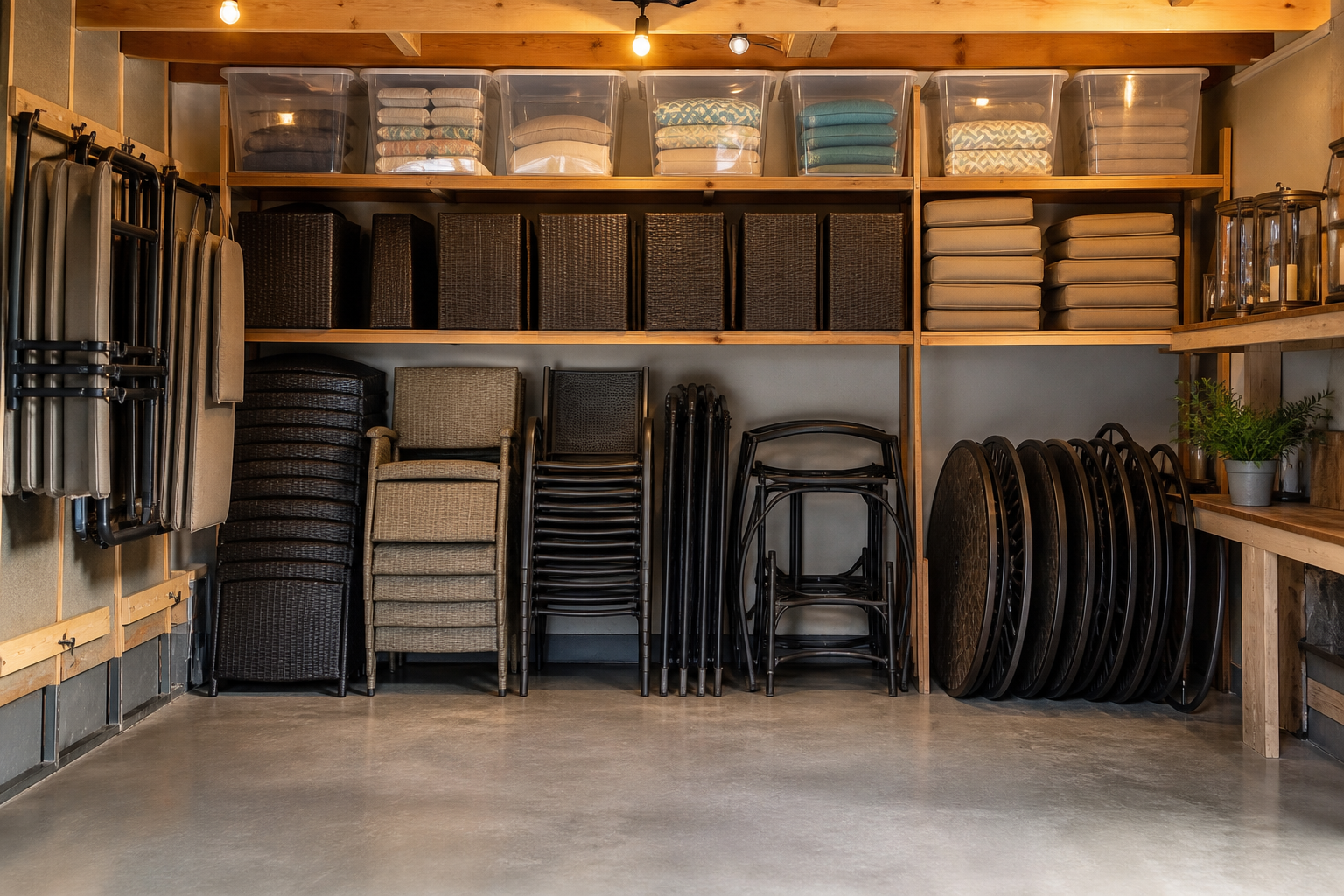
Strategy 6: Utilizing Specialized Patio Furniture Storage Solutions
Beyond basic covers, a variety of specialized storage solutions are available to enhance your Patio Furniture Storage efforts. These options provide dedicated protection and can help keep your outdoor space organized even during the off-season. Choosing the right solution depends on your furniture type, available space, and budget.
Storage boxes and chests are excellent for cushions, pillows, and smaller decorative items. Look for models that are weatherproof, lockable, and offer good ventilation. The pros of these boxes include convenience and protection from pests and moisture. However, cons can include their bulkiness and limited capacity for larger furniture pieces. Make sure they are truly waterproof, or consider adding a liner for extra protection.
Dedicated storage sheds, whether resin, metal, or wood, offer a robust solution for larger sets. A good shed should be waterproof, well-ventilated, and have a sturdy foundation to keep contents off the ground. Features like shelving or hooks can further improve organization. These provide comprehensive protection but require a significant upfront investment and space in your yard. For those with limited space, vertical storage solutions or wall mounts for folding chairs can be incredibly useful.
Strategy 7: Considering Professional Patio Furniture Storage
For homeowners with high-value patio furniture, limited personal storage space, or those seeking maximum convenience, professional Patio Furniture Storage can be an excellent option. This service removes the hassle of preparation and transport, offering peace of mind that your investment is in expert hands.
Professional storage facilities, particularly climate-controlled units, provide optimal conditions. They protect furniture from extreme temperatures, humidity fluctuations, and pests, which are common concerns in standard garages or sheds. The cost of professional storage varies widely based on location, the size of your furniture set, and the duration. Expect to pay anywhere from $50 to $300+ per month. Some moving companies also offer specialized furniture storage services, often including pickup and delivery.
While this is typically the most expensive option, the benefits of professional care, security, and convenience can outweigh the cost for many. It ensures your furniture is perfectly preserved and ready for the next season without any effort on your part. This can be a particularly smart choice for antique or custom-made pieces that require extra care.
Strategy 8: DIY and Budget-Friendly Patio Furniture Storage Options
Effective Patio Furniture Storage doesn’t always require a significant financial outlay. There are several creative and budget-friendly options that can provide adequate protection, especially if you have existing sheltered spaces. These DIY solutions focus on utilizing what you already have and making smart, inexpensive purchases.
One of the cheapest options is to utilize existing covered spaces like a porch, deck overhang, or an unused corner of a garage or basement. Even a carport can offer substantial protection from direct rain and snow. For minimal cost, heavy-duty tarps can be used as covers, secured with bungee cords or ropes. While less breathable and aesthetically pleasing than dedicated covers, tarps offer a good barrier against moisture and debris. Just ensure there’s some airflow to prevent condensation.
Simple plastic storage bins are an affordable solution for cushions, pillows, and smaller accessories. Look for bins with secure, tight-fitting lids to keep out moisture and pests. For larger items, consider disassembling them and stacking them carefully to save space. Repurposing old blankets or sheets can provide a basic layer of protection against scratches and dust. The key is to ensure everything is clean and dry before storage, regardless of the method chosen.
Your outdoor furniture is an investment in your comfort and lifestyle. By implementing these 8 brilliant strategies for Patio Furniture Storage, you can significantly extend the life and beauty of your pieces. From thorough cleaning and choosing the right covers to utilizing specialized solutions or even professional services, each step contributes to preserving your outdoor oasis. Remember that proper care during the off-season ensures your furniture remains vibrant and welcoming for many seasons to come. Make the commitment to protect your patio furniture today, and enjoy its enduring appeal for years to come.
What are the best methods for storing patio furniture long-term?
The best methods for long-term patio furniture storage include thorough cleaning, disassembling if possible, applying protectants (like rust-inhibitors or UV sprays), and covering pieces with breathable, waterproof covers. Storing furniture in a cool, dry, and elevated space like a garage, shed, or dedicated storage unit is ideal to prevent moisture damage and pest infestation.
Why is it important to store patio furniture during off-season?
Storing patio furniture during the off-season protects it from harsh weather elements such as extreme temperatures, heavy rain, snow, UV radiation, and strong winds. This prevents damage like fading, cracking, rust, mildew, and structural deterioration, significantly extending the lifespan and preserving the aesthetic appeal of your investment.
How do I protect patio furniture from harsh weather elements?
To protect patio furniture from harsh weather, use durable, waterproof covers, especially those designed for specific furniture types. Consider storing cushions indoors. For metal furniture, apply rust-resistant coatings; for wood, use sealants. During severe weather, moving furniture to a sheltered area like a garage or covered porch is highly recommended.
What types of outdoor furniture storage solutions are available?
Available outdoor furniture storage solutions include protective covers (individual or full-set), storage boxes/chests for cushions and smaller items, dedicated storage sheds, and weatherproof storage bags. For larger sets, outdoor storage cabinets or utilizing existing structures like garages and basements are common options for effective patio furniture storage.
Where can I store large patio furniture sets safely?
Large patio furniture sets can be safely stored in a garage, a dedicated outdoor storage shed, a basement, or a rented climate-controlled storage unit. Ensure the space is dry, well-ventilated, and free from pests. Disassembling large pieces can help save space and prevent damage during storage.
How do you prepare patio furniture for winter storage?
To prepare patio furniture for winter storage, thoroughly clean all surfaces, removing dirt, grime, and mildew. Dry everything completely. Lubricate moving parts, apply protective finishes (e.g., wax for wood, rust-inhibitor for metal), remove cushions for indoor storage, and cover the furniture with heavy-duty, breathable covers before placing it in a dry, sheltered location.
What are the pros and cons of different patio furniture storage boxes?
Patio furniture storage boxes offer convenience and protect smaller items like cushions from moisture and pests (pros). However, they can be bulky, may not be fully waterproof without proper sealing, and have limited capacity for larger furniture pieces (cons). Material and construction quality also vary, impacting durability and weather resistance.
Where can I buy durable outdoor storage covers for patio furniture?
Durable outdoor storage covers for patio furniture can be purchased from home improvement stores (e.g., Lowe’s, Home Depot), specialty outdoor living retailers, and online marketplaces like Amazon or Wayfair. Look for covers made from high-quality materials like heavy-duty polyester, solution-dyed fabric, or reinforced vinyl with features like UV resistance, ventilation, and secure tie-downs.
What features should I look for in a good patio furniture storage shed?
A good patio furniture storage shed should be waterproof, well-ventilated to prevent mildew, secure with a lockable door, and have a sturdy foundation to keep contents off the ground. Consider its size, material (resin, metal, wood), and ease of assembly. Shelving or hooks for organization are also beneficial features for efficient patio furniture storage.
How much does it cost to store patio furniture professionally?
The cost to store patio furniture professionally varies widely based on location, the size of the furniture set, the type of storage unit (e.g., climate-controlled), and the duration. Expect to pay anywhere from $50 to $300+ per month. Some moving companies offer specialized furniture storage services that might include pickup and delivery, adding to the overall cost.
Are there specific storage requirements for different materials like wicker or metal?
Yes, different materials have specific storage needs. Wicker (natural or synthetic) benefits from dry, well-ventilated storage to prevent mildew and cracking. Metal furniture should be cleaned, dried, and treated with rust-inhibitors, then covered. Wood needs cleaning, sealing, and dry storage to prevent warping or rot. Always consult manufacturer guidelines for optimal patio furniture storage based on material.
What are the best brands for waterproof patio furniture storage bags?
Some of the best brands known for durable, waterproof patio furniture storage bags include Classic Accessories, Ravenna, Duck Covers, and CoverMates. These brands typically offer heavy-duty fabrics, reinforced seams, and features like UV protection and water-resistant coatings to ensure maximum protection for your outdoor cushions and smaller furniture pieces.
Where can I find sales on patio furniture storage solutions?
You can find sales on patio furniture storage solutions during seasonal clearances (e.g., end of summer, after holidays), Black Friday, and Cyber Monday events. Home improvement stores, garden centers, and online retailers often offer discounts. Subscribing to newsletters from your favorite stores can also alert you to upcoming sales and promotions.
How to order custom-sized patio furniture covers for storage?
To order custom-sized patio furniture covers for storage, accurately measure your furniture’s length, width, height, and any unique dimensions. Many online retailers and specialty cover manufacturers offer customization services where you can input your exact measurements. This ensures a snug, effective fit for optimal protection from the elements.
What are the cheapest options for outdoor patio furniture storage?
The cheapest options for outdoor patio furniture storage often involve using existing covered spaces like a porch, deck overhang, or an unused corner of a garage. For minimal cost, you can use basic tarps secured with bungee cords, though this offers less breathability and aesthetic appeal than dedicated covers. Simple plastic storage bins for cushions also provide an affordable solution.
Learn more from authoritative resources: Consumer Reports and HGTV.