

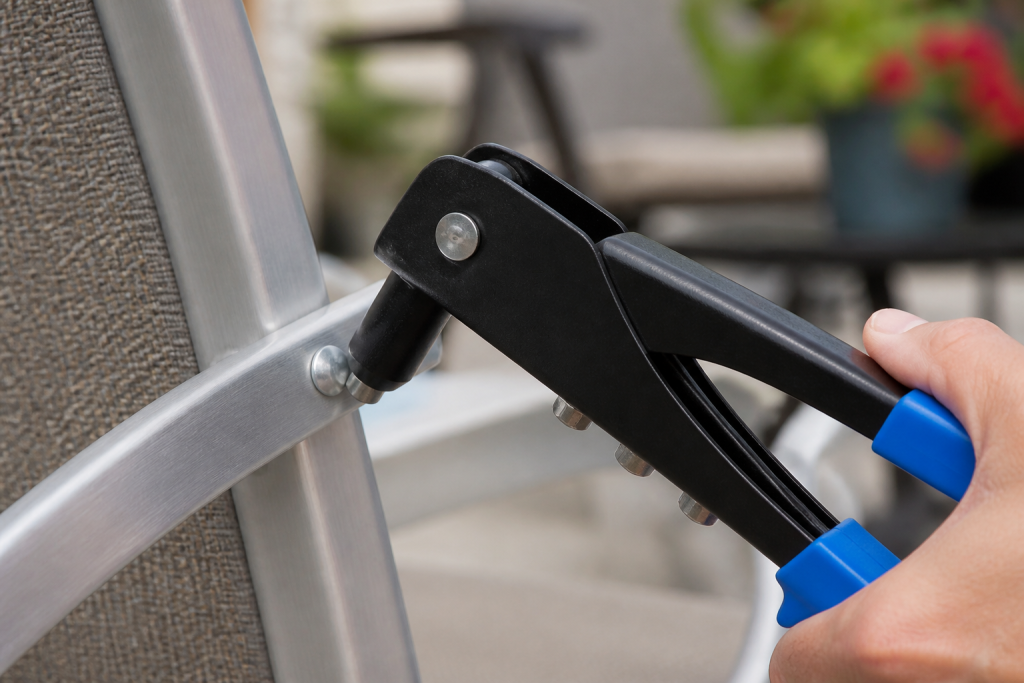
Patio Rivet Mistakes can quickly turn a simple repair into a frustrating and short-lived fix. Outdoor furniture endures constant exposure to the elements, making durable construction paramount. When rivets fail, it often signals underlying errors in selection or installation, compromising the stability and longevity of your beloved patio pieces. Understanding these common pitfalls is the first step toward achieving repairs that truly last.
This comprehensive guide will illuminate the most critical errors in patio riveting. We will explore why certain choices lead to premature failure, detail the precise techniques required for secure installation, and provide actionable strategies to ensure your outdoor furniture remains robust and beautiful for years to come. Prepare to transform your approach to patio furniture repair, moving from temporary fixes to enduring solutions.
Key Takeaways
- Understand the three critical Patio Rivet Mistakes: incorrect rivet selection, improper installation techniques, and neglecting environmental factors.
- Learn how choosing the right rivet material and size is paramount for preventing corrosion and ensuring structural integrity in outdoor furniture.
- Discover the essential tools and proper methods for rivet installation to avoid common errors that lead to loose or failing joints.
- Gain insights into maintaining your riveted furniture and safely removing damaged rivets to extend its lifespan and prevent future Patio Rivet Mistakes.
Understanding Common Patio Rivet Mistakes and Their Impact
Many homeowners embark on DIY patio furniture repairs with good intentions, only to find their efforts undone by recurring issues. These persistent problems often stem from fundamental Patio Rivet Mistakes made during the repair process. Recognizing these errors is crucial to preventing future failures and ensuring the longevity of your outdoor pieces.
Rivets on patio chairs or tables can fail prematurely for a variety of reasons. Often, it’s a combination of incorrect material choice, inadequate installation, and the relentless stress of outdoor conditions. A rivet that is not properly suited for the environment or the load it bears will inevitably weaken, leading to loose joints and structural instability. Understanding these common Patio Rivet Mistakes is the first step toward effective repair.
Visual indicators of a poorly installed rivet are usually quite apparent. You might notice a wobbly joint, a rivet head that isn’t flush or appears deformed, or even cracks forming around the rivet hole. These are clear signs that the rivet isn’t providing the secure connection it should. Addressing these issues early can prevent more extensive damage to the furniture frame.
Critical Error 1: Incorrect Rivet Selection to Avoid Patio Rivet Mistakes
One of the most significant Patio Rivet Mistakes is choosing the wrong rivet for the job. This error encompasses everything from material incompatibility to incorrect size, and it directly impacts the durability and safety of your furniture. Outdoor environments demand specific properties from fasteners that indoor applications do not.
Why is selecting the correct rivet size crucial for durable patio repairs? The answer lies in grip range and shear strength. A rivet that is too short won’t fully engage both materials, leading to a weak connection. Conversely, a rivet that is too long might not compress properly, leaving a loose joint or deforming the material. The diameter must also match the pre-drilled hole precisely to ensure maximum holding power.
To prevent future issues, you must choose the best type of rivets for outdoor furniture. This means prioritizing corrosion-resistant materials like aluminum, stainless steel, or monel. These materials withstand moisture, humidity, and temperature fluctuations far better than standard steel rivets, which will quickly rust and compromise the joint. For aluminum patio furniture, using aluminum rivets is often the best choice to prevent galvanic corrosion, a common issue when dissimilar metals are in contact.
Some patio furniture rivets rust or corrode faster than others primarily due to material choice and environmental exposure. Steel rivets, unless specifically coated for outdoor use, are highly susceptible to rust. Even stainless steel has different grades, with some offering superior corrosion resistance. Always opt for materials designed for prolonged outdoor exposure to avoid this critical type of Patio Rivet Mistakes.
Avoiding Installation-Related Patio Rivet Mistakes
Even with the correct rivets, improper installation techniques can render your efforts useless. The second critical category of Patio Rivet Mistakes involves the actual process of setting the rivet. Precision, the right tools, and consistent pressure are all vital for a secure and lasting bond.
Critical Error 2: Improper Installation Techniques to Prevent Patio Rivet Mistakes
Many common riveting errors when repairing outdoor furniture stem from a lack of attention to detail during installation. These include misaligned holes, insufficient clamping pressure, or using a worn-out rivet gun. Each of these can lead to a rivet that fails to hold securely, resulting in a wobbly or unstable piece of furniture.
Essential Tools for Preventing Patio Rivet Mistakes
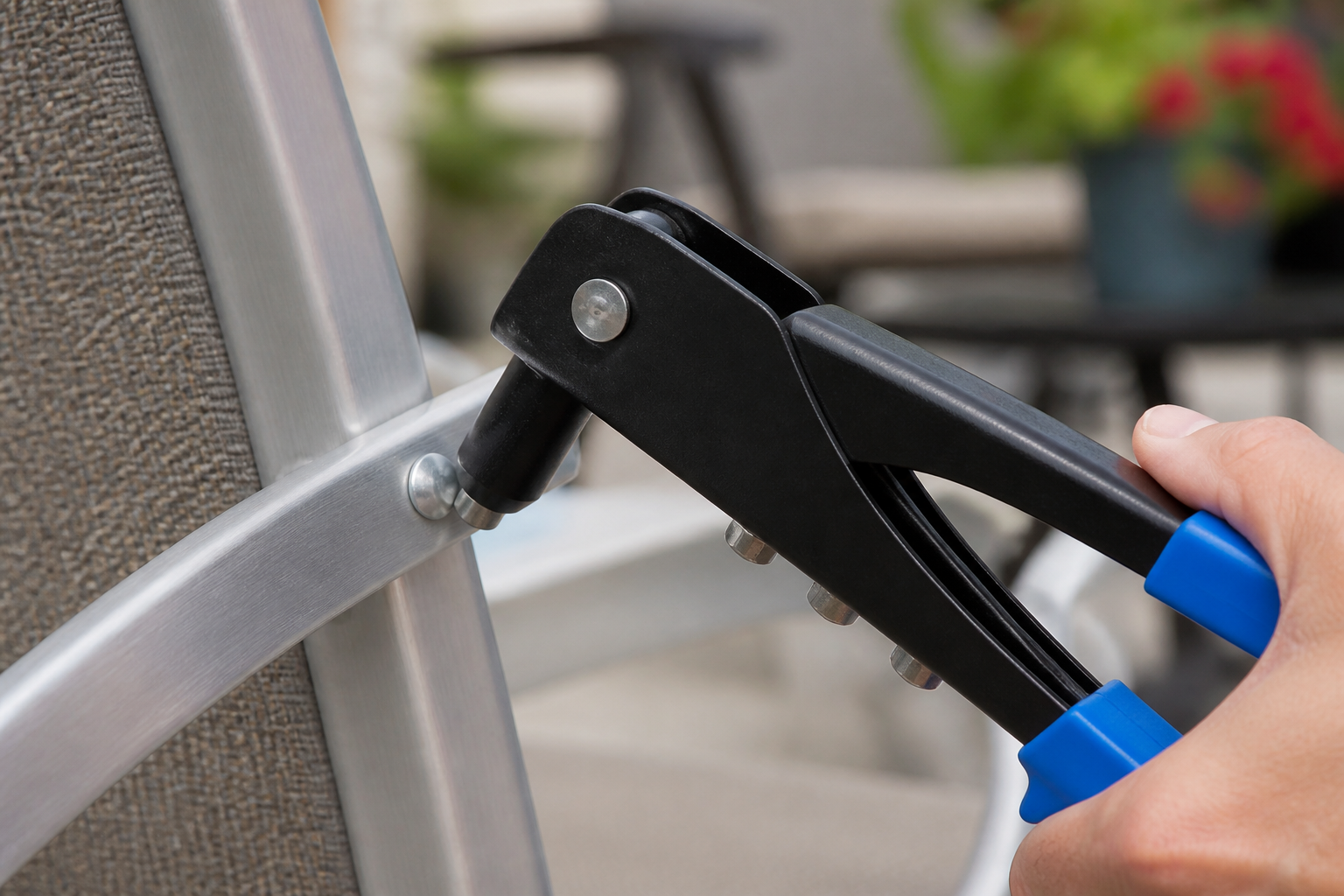
What specific tools are essential for proper patio rivet installation? A quality rivet gun is non-negotiable. Depending on the volume of repairs, you might choose a manual, pneumatic, or even battery-powered model. Beyond the rivet gun, you’ll need a drill with precisely sized bits, a center punch to mark your holes accurately, and possibly a deburring tool to smooth the edges of drilled holes. Investing in the right tools helps minimize Patio Rivet Mistakes and ensures a professional finish.
To avoid common riveting errors, always ensure your holes are clean, burr-free, and perfectly aligned. When setting the rivet, apply firm, consistent pressure. You should hear a distinct
Avoid Patio Rivet Mistakes: Get Durable Parts from American Slings!
Ensure your patio furniture repairs last with high-quality, weather-resistant rivets and expert guidance. American Slings and Patio Supplies offers everything you need for flawless outdoor furniture restoration.
Frequently Asked Questions About Patio Rivet Mistakes
What are the most common mistakes when riveting patio furniture?
The most common patio rivet mistakes include using the wrong rivet size or material, improper hole alignment, inadequate setting pressure, and failing to use a backup washer. These errors often lead to loose connections, premature corrosion, and structural instability in your outdoor furniture.
Why do rivets on patio chairs or tables fail prematurely?
Rivets on patio furniture can fail prematurely due to several factors, primarily improper installation techniques. This includes using rivets not suited for outdoor exposure, insufficient compression during installation, or material fatigue caused by repetitive stress and environmental corrosion. Avoiding common patio rivet mistakes during repair is crucial for longevity.
How can I avoid common riveting errors when repairing outdoor furniture?
To avoid common riveting errors, always select rivets made from corrosion-resistant materials (like stainless steel or aluminum) and ensure they are the correct length and diameter for your application. Use the appropriate riveting tool with consistent, firm pressure, and always ensure proper hole preparation and alignment before setting the rivet. Careful attention to detail can prevent many patio rivet mistakes.
What specific tools are essential for proper patio rivet installation?
For proper patio rivet installation, essential tools include a quality rivet gun (manual or pneumatic, depending on volume), a drill for precisely sized holes, drill bits, a center punch for marking, and possibly a deburring tool to clean hole edges. Selecting the right tools helps minimize patio rivet mistakes and ensures a secure fit.
Why is selecting the correct rivet size crucial for durable patio repairs?
Selecting the correct rivet size is crucial because it ensures proper grip and shear strength. A rivet that’s too small won’t provide sufficient hold, while one that’s too large can damage the material or prevent proper seating. Correct sizing directly impacts the durability and stability of your patio furniture repair, preventing significant patio rivet mistakes.
How do I choose the best type of rivets to prevent future issues with patio furniture?
To prevent future issues, choose rivets made from materials compatible with outdoor environments, such as aluminum, stainless steel, or monel, which resist rust and corrosion. Consider the grip range of the rivet, ensuring it matches the total thickness of the materials being joined. For maximum durability, opt for sealed rivets in areas exposed to moisture, avoiding common patio rivet mistakes from material choice.
What are the visual indicators of a poorly installed rivet on patio furniture?
Visual indicators of a poorly installed rivet include a loose or wobbly joint, an unsymmetrical or unfinished rivet head, a rivet that protrudes excessively, or signs of material distortion around the rivet. These are clear signs of patio rivet mistakes that compromise the structural integrity and appearance of your furniture.
What type of rivets should be used for aluminum patio furniture to prevent corrosion and failure?
For aluminum patio furniture, it is best to use aluminum rivets to prevent galvanic corrosion, which occurs when dissimilar metals react in the presence of an electrolyte (like moisture). Stainless steel rivets can also be used, but ensure they are of a grade that minimizes galvanic reaction with aluminum, or use an isolating barrier. This choice avoids common patio rivet mistakes related to metal compatibility.
How to safely remove a damaged or incorrectly installed rivet from patio furniture?
To safely remove a damaged or incorrectly installed rivet, use a drill bit slightly larger than the rivet’s mandrel (the small pin in the center). Carefully drill through the head of the rivet until it separates, then use a punch to tap out the remaining body. Always wear safety glasses and avoid drilling too deeply to prevent damaging the furniture frame.
What are the key best practices for ensuring a long-lasting rivet repair on patio furniture?
Key best practices for a long-lasting rivet repair include thorough cleaning of the area, accurate hole drilling, selecting the correct corrosion-resistant rivet type and size, applying consistent setting pressure with the right tool, and verifying the stability of the joint post-installation. Adhering to these steps ensures you avoid common patio rivet mistakes and achieve a durable fix.
Learn more from authoritative resources: Consumer Reports and HGTV.