

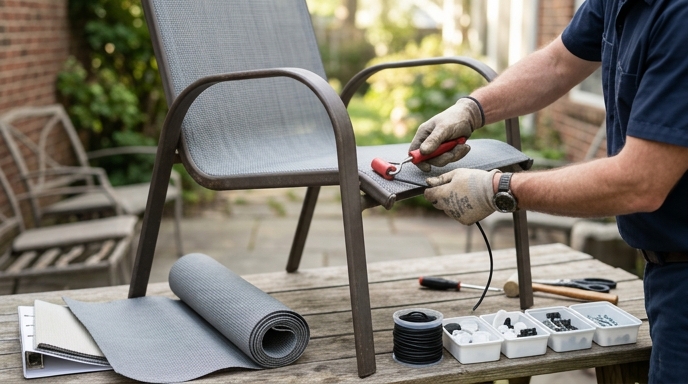
A patio chair with sagging, torn, or sun-faded fabric can make the whole outdoor setting feel tired. The good news is that learning how to install replacement chair slings is usually far more practical than replacing quality furniture frames, especially when the frame is still structurally sound and worth preserving.
For many homeowners, the real hesitation is not the sling itself. It is the uncertainty around fit, tension, and whether the installation will go smoothly. Once you understand how sling chairs are built and where the process can go wrong, the job becomes much more manageable and the finished result can look polished enough for a refined outdoor living space.
Before you install replacement chair slings
Start by confirming that your chair uses a true sling construction. Most sling chairs have fabric panels secured by plastic spline or rods that slide into channels on the chair frame. If the fabric is wrapped, stapled, or bolted on in a different way, the installation method may not be the same.
It is also worth checking the frame itself before ordering or installing anything. A replacement sling cannot compensate for bent rails, cracked welds, stripped fasteners, or severe corrosion. Minor surface wear is common and often cosmetic, but if the side rails are distorted even slightly, the new sling may bind during installation or sit unevenly once tensioned.
This is also the stage where measurements matter most. A sling that is too short can be nearly impossible to install. One that is too long may slide in easily but feel loose and unsupported. Custom-fit slings are often the best choice for premium patio furniture because they preserve both comfort and appearance.
Tools and setup for how to install replacement chair slings
You do not need a workshop full of equipment, but a clean setup makes the process easier. Most installations call for a screwdriver or drill, an Allen wrench if your frame uses hex hardware, rubber mallet, scissors or utility knife for trimming old spline if needed, and a heat source such as warm sunlight or a heat gun used carefully. A mild cleaner and cloth are also helpful because dirty frame channels can interfere with a smooth fit.
Give yourself enough working space to lay the chair parts out in order. A table or padded surface is ideal, since dragging frame pieces across concrete can scratch the finish. If you are restoring multiple chairs, work on one complete chair first. That first installation helps you confirm the fit and get comfortable with the process before moving through the rest of the set.
Remove the old sling carefully
The first real step in how to install replacement chair slings is disassembling the chair frame. On most patio sling chairs, the two side rails need to be separated from the rest of the frame so the old fabric panel can slide out. Remove the fasteners methodically and set them aside in a way that keeps left and right components easy to identify.
If the chair has been outdoors for years, hardware may be stubborn. A little patience matters here. Forcing screws can strip heads or damage the frame. If needed, use penetrating oil and let it sit before trying again.
Once the rails are free, pull the old sling fabric out of the channels. Sometimes it slides out easily. Sometimes age, dirt, and heat have practically fused the spline into place. If it resists, work gradually rather than twisting the rail. This is a good time to inspect the old sling for clues about fit, rod placement, and orientation.
After the old fabric is removed, clean the sling channels thoroughly. Even small debris inside the rails can create drag when you slide the new sling in. Wipe down the frame, inspect the hardware, and replace worn fasteners or cracked end caps if needed. A beautiful new sling on tired hardware rarely gives the finished result homeowners want.
Slide the new sling into the rails
Most replacement slings arrive with spline or rod material already sewn into both sides. Align the new panel so the finished side will face outward correctly once the chair is reassembled. This sounds obvious, but it is one of the most common installation mistakes.
Feed one side of the sling into one rail channel, then the other side into the opposite rail. Keep the fabric straight as you go. If one side gets ahead of the other, the panel can twist, which makes final assembly harder. The goal is smooth, even progress rather than speed.
If the fit feels snug, that is often normal. High-quality slings are designed to tension properly once installed. Warm fabric is more flexible than cold fabric, so installation is usually easier in warm weather or after the sling has been gently heated. You want the fabric pliable, not hot. Excessive heat can damage certain materials or create uneven stretch.
Reassemble the frame without forcing it
Once both rails are loaded with the new sling, begin reattaching the frame. This is where many people think something is wrong, because the chair may not line up easily right away. In reality, a properly sized sling often requires some persuasion as the frame comes back together and the fabric begins to tension.
Start all screws loosely before tightening any one point completely. That gives the frame some flexibility and helps you align the holes evenly. If you tighten one side too soon, the opposite side can become difficult to fit.
You may need to press the frame sections together while guiding bolts into place. A helper can make this easier, especially on larger dining chairs or chaise slings. Use steady pressure, not brute force. If the frame is wildly misaligned, stop and confirm that the sling is inserted fully and oriented correctly.
A rubber mallet can help tap rails into position, but keep it controlled. The idea is to seat components, not hammer them into submission. Outdoor furniture frames can be durable and still vulnerable to cosmetic damage if handled roughly.
Let the sling relax and tension naturally
After assembly, the sling may appear tighter than expected. That is normal. New sling fabric often needs a short settling period to conform to the frame and deliver the right balance of support and comfort.
Place the chair in a warm area and allow the fabric to relax naturally. In many cases, a day or two of warmth helps the sling reach its intended fit. Resist the urge to overheat or aggressively stretch the material by hand. Too much intervention can reduce the clean, tailored appearance that makes restored patio furniture look elevated rather than improvised.
It is also smart to test the chair gently at first. Sit down carefully, check that the sling remains centered, and make sure the frame feels solid. A properly installed sling should feel supportive, smooth, and secure, without excessive wrinkles or side-to-side shifting.
Common issues when installing replacement chair slings
If the sling will not slide into the rails, the channel may still contain debris, the spline size may be incorrect, or the fabric may simply be too cold and stiff. If the frame will not go back together, there may be tension from uneven rail loading, or the sling length may be off.
Wrinkling can mean the sling is not fully seated in the channels or that the panel dimensions are not quite right for the chair. Uneven tension from left to right often points to misalignment during installation. Sometimes loosening the frame and re-centering the sling solves the issue cleanly.
There is also a difference between snug and impossible. Premium slings are not meant to drop in loosely, but they should still correspond to the frame with reasonable installation effort. If everything is clean, warm, and correctly aligned yet the fit still seems extreme, it is worth pausing before risking damage to the frame or fabric.
When professional guidance helps
Some chairs are straightforward. Others have curved rails, older hardware, unusual dimensions, or brand-specific construction details that make the process less predictable. If you own higher-end patio furniture, careful measuring and model compatibility matter just as much as the installation itself.
That is where a specialized source can make the project feel more controlled. Chair Slings Store serves homeowners who want a direct path from worn seating to a more polished outdoor setup, with custom-fit options and the supporting hardware needed to restore comfort without replacing the entire collection.
Installing a new sling is not just a repair task. It is a way to preserve furniture you already enjoy, improve the look of your space, and extend the life of pieces designed for years of outdoor use. Take your time, work carefully, and let precision do the heavy lifting so your patio feels finished again.
Need more help before ordering? Review our measuring guide for patio slings and our chair sling installation tips for a smoother replacement process.