

Rivet Installation Guide: 7 Powerful Tips for Secure Fastening
Securing and repairing structures, especially outdoor furniture, demands precision and the right techniques. A robust and reliable connection is paramount for both safety and longevity. This comprehensive Rivet Installation Guide will equip you with the knowledge and skills to achieve professional-grade results, ensuring your projects stand the test of time. Whether you are a DIY enthusiast or a seasoned professional, mastering rivet installation is an invaluable skill.
Riveting offers a strong, permanent fastening solution that is often superior to screws or bolts in certain applications, particularly when working with thin materials or in situations where access is limited to one side. We will delve into the essential tools, proper preparation, various rivet types, and step-by-step instructions. Our goal is to provide you with the ultimate resource for secure and durable fastening.
Key Takeaways
- Master the essential steps of any Rivet Installation Guide, from preparation to execution, ensuring a strong and lasting bond.
- Discover the critical tools required for successful riveting, including hand riveters, drills, and appropriate safety gear.
- Understand the different types of rivets and their specific applications, helping you choose the right fastener for every project.
- Learn how to troubleshoot common issues and safely remove rivets without damaging your materials.
Rivet Installation Guide: Essential Tools for Success
A successful riveting project begins with having the right equipment. Just as a chef needs the correct knives, a craftsman requires specific tools for a flawless finish. For any comprehensive Rivet Installation Guide, a few essential items are non-negotiable. These tools ensure efficiency, accuracy, and, most importantly, a secure and durable joint.
The primary tool for most DIY and light industrial applications is the hand riveter, often called a rivet gun or blind riveter. Beyond the riveter itself, you will need a drill, appropriately sized drill bits, and crucial safety gear. Investing in quality tools will not only make the job easier but also contribute significantly to the longevity of your repairs.
Selecting the Right Hand Riveter for Your Rivet Installation Guide
Hand riveters come in various designs, from simple single-hand models to heavy-duty two-hand versions. The choice depends on the material thickness, rivet diameter, and frequency of use. For occasional patio furniture repairs, a standard hand riveter with interchangeable nose pieces will suffice. Ensure it feels comfortable in your hand and offers sufficient leverage.
When selecting a riveter, consider its construction and the range of rivet sizes it can accommodate. A good quality riveter will have durable jaws and a sturdy body, capable of withstanding repeated use. Always check the manufacturer’s specifications to ensure compatibility with your chosen rivets.
Where to Buy High-Quality Blind Rivets and Setting Tools Online
Finding reliable suppliers for blind rivets and setting tools is crucial for any project. Online retailers specializing in hardware, automotive supplies, or even patio furniture parts often offer a wide selection. Look for suppliers who provide detailed product descriptions, material specifications, and grip range charts.
When purchasing, prioritize quality over cost. High-quality rivets made from aluminum, steel, or stainless steel will provide superior strength and corrosion resistance, especially for outdoor applications. Always compare prices and read reviews to ensure you are getting the best value and product for your specific Rivet Installation Guide needs.
Mastering the Rivet Installation Guide: Proper Hole Preparation
The foundation of any strong rivet joint lies in meticulous hole preparation. This step is often underestimated but is absolutely crucial for the integrity and longevity of your fastening. An improperly sized or prepared hole can lead to a weak connection, premature rivet failure, and even damage to the materials being joined. This section of our Rivet Installation Guide emphasizes the importance of precision.
Before you even think about inserting a rivet, ensure your materials are clean, free of burrs, and perfectly aligned. Any debris or unevenness can prevent the rivet from seating correctly, compromising its ability to create a secure bond. Taking the time to prepare your holes correctly will save you headaches and ensure a durable repair.
The Importance of Precision in Your Rivet Installation Guide
The drill bit size must precisely match the rivet’s diameter. A hole that is too small will prevent the rivet from entering, while a hole that is too large will not allow the rivet to expand properly, resulting in a loose joint. Always consult a rivet size chart and use the recommended drill bit for the specific rivet you are using.
After drilling, deburr the edges of the hole on both sides using a deburring tool or a larger drill bit. This removes any sharp edges that could interfere with the rivet’s expansion or damage the material. Proper clamping of the materials during drilling is also vital to prevent movement and ensure accurate alignment, which is a key part of any effective Rivet Installation Guide.
Rivet Installation Guide: Secure Your Patio Furniture with American Slings!
Ensure the lasting stability of your outdoor furniture with high-quality rivets and expert tools from American Slings and Patio Supplies. We provide durable replacement parts manufactured in the USA for every restoration project.
Types of Rivets: A Comprehensive Rivet Installation Guide
The world of rivets is diverse, with each type designed for specific applications and offering unique advantages. Understanding these differences is fundamental to selecting the correct fastener for your project, a critical aspect of any thorough Rivet Installation Guide. Choosing the wrong rivet can compromise the strength and appearance of your repair.
From the common blind rivet to the robust structural rivet, each has its own installation method and ideal use case. This section will explore the most prevalent types, helping you make an informed decision for your fastening needs. Knowing your rivets ensures a secure and appropriate connection every time.
Understanding Blind Rivets for Your Rivet Installation Guide
Blind rivets, often called pop rivets, are perhaps the most common type for general repairs, especially when access is limited to only one side of the material. They consist of a rivet body and a mandrel. Installation involves pulling the mandrel through the rivet body, causing the body to expand on the blind side and form a secure joint.
Blind rivets are available in various materials, including aluminum, steel, and stainless steel, and come with different head styles (dome, countersunk, large flange). Their versatility makes them ideal for applications ranging from automotive repairs to securing patio furniture components. This type of rivet is a staple in any practical Rivet Installation Guide.
Exploring Solid and Drive Rivets
Solid rivets are one of the oldest and strongest types of fasteners, requiring access to both sides of the material for installation. They are set by deforming the tail end with a hammer or pneumatic tool, creating a permanent, high-strength joint. Solid rivets are commonly used in aircraft manufacturing and heavy-duty structural applications where maximum strength is paramount.
Drive rivets, on the other hand, are installed by hammering a pin into the rivet head, which expands the tail. They are a simpler alternative to blind rivets when a quick, one-sided installation is needed, though they generally offer less shear strength. Each type serves a distinct purpose in the vast field of fastening.

Step-by-Step Rivet Installation Guide: Using a Hand Riveter
Installing a pop rivet with a hand riveter is a straightforward process once you understand the steps. This section provides a detailed, step-by-step Rivet Installation Guide to ensure you achieve a strong and reliable connection every time. Following these instructions carefully will help you avoid common pitfalls and ensure a professional finish.
From preparing your materials to the final squeeze of the riveter, each step plays a vital role in the overall strength of the joint. Pay close attention to detail, and remember that practice makes perfect. Soon, you will be confidently tackling various riveting projects with ease.
Preparing for a Smooth Rivet Installation Guide
First, gather all your necessary tools: the hand riveter, the correct size drill bit, a drill, safety glasses, and the appropriate rivets. Measure the total thickness of the materials you intend to join to select a rivet with the correct grip range. The grip range is the maximum and minimum total thickness a rivet can effectively fasten.
Next, clamp the materials securely together to prevent any movement during drilling. Drill a pilot hole through both materials, ensuring the hole diameter precisely matches the rivet’s body. Deburr the edges of the hole to remove any sharp fragments, creating a clean surface for the rivet to sit against.
Executing the Rivet Installation Process
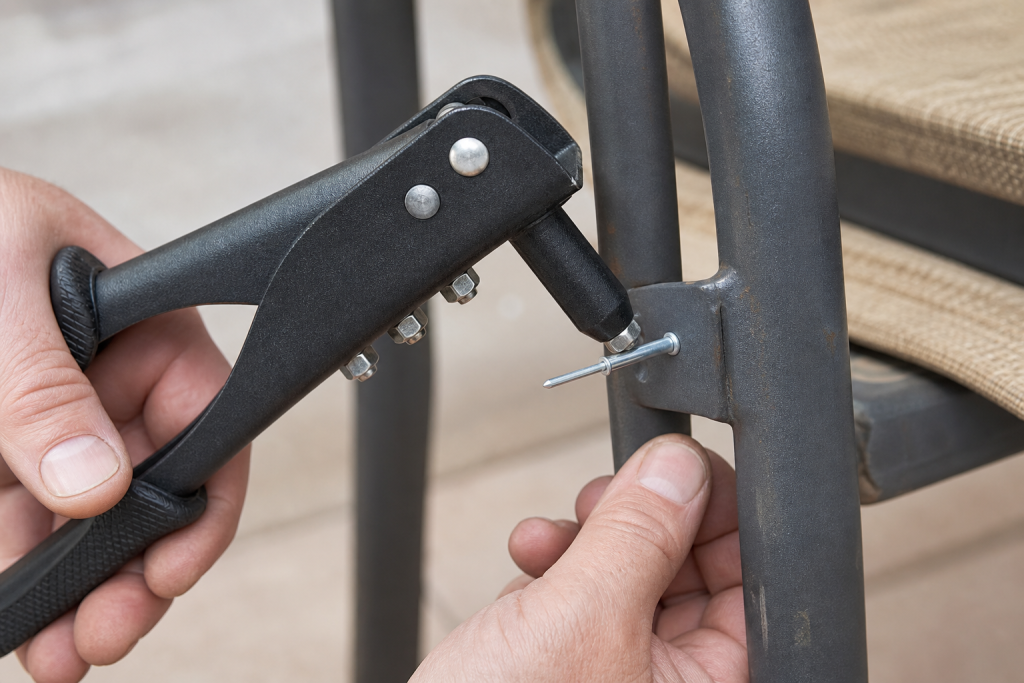
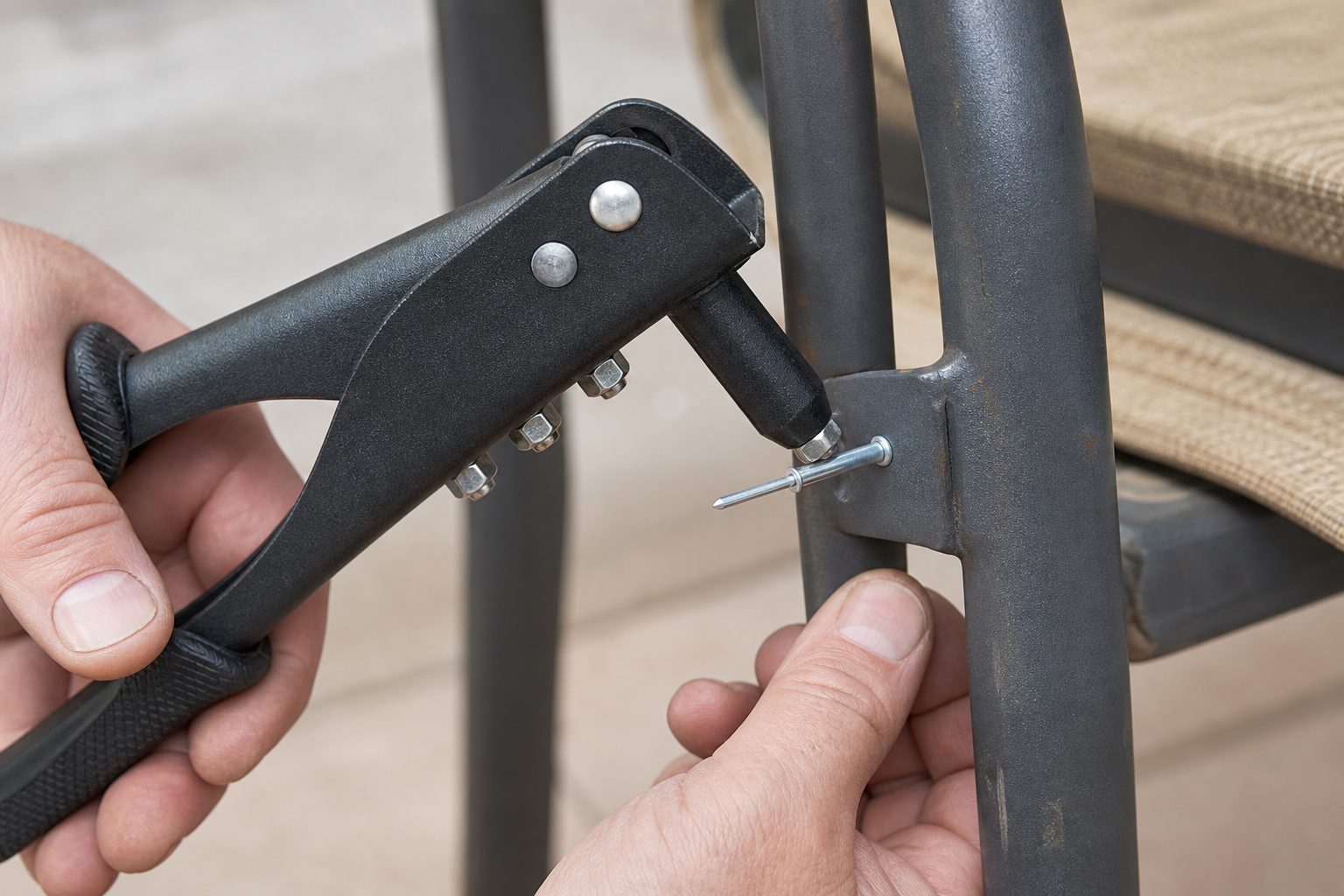
Once the hole is prepared, insert the rivet into the hole, ensuring the rivet head is flush against the material. Select the correct nose piece for your hand riveter that matches the rivet’s diameter and attach it to the tool. Insert the rivet’s mandrel (the small pin) into the nose piece of the hand riveter.
With the rivet in place and the mandrel secured in the riveter, firmly squeeze the handles of the hand riveter. You will feel resistance as the rivet’s body begins to expand on the blind side. Continue squeezing the handles repeatedly until the mandrel snaps off with an audible pop. This indicates that the rivet has fully set, creating a secure joint. Inspect the rivet head to ensure it is flush and the joint is tight.
Advanced Rivet Installation Guide: Structural vs. Standard Blind Rivets
While standard blind rivets are excellent for many applications, certain projects demand a higher level of strength and structural integrity. This is where structural rivets come into play. Understanding the distinction between these two types is a key component of an advanced Rivet Installation Guide, allowing you to choose the optimal fastener for critical applications.
Structural rivets are engineered to provide superior shear and tensile strength, making them suitable for heavy-duty fastening where robust connections are paramount. Their design ensures a more consistent and powerful clamp, crucial for demanding environments or load-bearing structures.
When to Choose Structural Rivets
Structural rivets differ from standard blind rivets primarily in their design and performance. They often feature an internal locking mechanism that retains the mandrel head within the rivet body, creating a fully sealed and stronger joint. This design prevents the mandrel from falling out, which can be a concern with some standard blind rivets, and enhances the rivet’s resistance to vibration and fatigue.
You should consider structural rivets for applications such as automotive chassis repair, heavy machinery, marine environments, or any scenario where the joint will experience significant stress or vibration. While their installation process is similar to standard blind rivets, they typically require a more powerful rivet gun, often pneumatic, to achieve the necessary setting force. For more technical details on rivet strength, you can consult engineering resources like Engineer’s Edge on Rivet Strength.
Troubleshooting Your Rivet Installation Guide: Common Mistakes and Removal
Even with careful planning, mistakes can happen during rivet installation. Knowing how to identify common errors and safely remove a poorly installed rivet is as important as knowing how to install one correctly. This section of our Rivet Installation Guide will help you troubleshoot issues and rectify them without damaging your materials.
Addressing problems early can prevent further complications and ensure the overall success of your project. Understanding the signs of a faulty rivet and the proper removal techniques will save you time and effort in the long run, maintaining the integrity of your work.
Avoiding Pitfalls in Your Rivet Installation Guide
Common mistakes include using the wrong size drill bit, failing to clean burrs from the holes, not clamping materials securely, and using a rivet with an incorrect grip range. Each of these can compromise the strength and durability of the joint. Always double-check your measurements and ensure your tools are in good working order.
Another frequent error is not fully setting the rivet. If the mandrel does not snap off cleanly, or if the rivet head appears loose, the rivet may not be properly expanded. This can lead to a weak connection that will fail prematurely. Always ensure a firm, consistent squeeze on the riveter handles until the mandrel breaks.
Safely Removing a Rivet
To safely remove a rivet without damaging the surrounding material, use a drill bit that is slightly larger than the rivet’s mandrel but smaller than the rivet’s body. Carefully drill through the head of the rivet until it detaches. Once the head is removed, the remaining body of the rivet can usually be punched out with a small punch and hammer.
Alternatively, a chisel and hammer can be used to shear off the rivet head, followed by punching out the body. Always wear safety glasses and exercise caution during removal to prevent injury and avoid marring the material. Patience and precision are key to a clean removal process.
Identifying a Poorly Installed Rivet
Signs of a poorly installed rivet include a loose or wobbly joint, a rivet head that is not flush with the material, or a mandrel that has not fully snapped off. If the rivet appears to be buckling or deforming unevenly, this also indicates a problem. A properly installed rivet will create a tight, secure connection with no visible gaps or movement.
Visually inspect the rivet from both sides if possible. On the blind side, the rivet should have expanded evenly to form a secure bulge. If you notice any of these signs, it is best to remove the faulty rivet and replace it with a new one, ensuring you follow all the steps in this Rivet Installation Guide carefully.
Beyond the Basics: Rivet Installation Guide for Diverse Applications
The principles of rivet installation extend far beyond simple repairs, finding application in a multitude of industries and projects. This section expands on the versatility of riveting, offering insights into specialized uses and safety considerations. A comprehensive Rivet Installation Guide should cover these broader contexts.
Whether you are working on automotive projects, joining dissimilar materials, or operating advanced pneumatic tools, understanding these nuances is crucial. This knowledge will enhance your skill set and ensure safe and effective fastening across various scenarios.
Best Rivet Gun for Automotive Repair
For automotive repair applications, the best rivet gun often depends on the specific task. While hand riveters are suitable for light-duty jobs like attaching trim or small brackets, pneumatic (air-powered) rivet guns are generally preferred for heavy-duty or high-volume work. Pneumatic tools offer greater power and reduce user fatigue, making them ideal for chassis work, panel replacement, or structural repairs.
Electric rivet guns are another excellent option, offering portability without the need for an air compressor. When choosing, consider the rivet material, diameter, and the frequency of use. A good automotive rivet gun should be durable, have interchangeable nose pieces, and provide consistent pulling force for various rivet types.
Joining Dissimilar Materials with Your Rivet Installation Guide
Rivets are an excellent choice for joining dissimilar materials where welding is not feasible or desirable. However, when fastening different metals, it is crucial to consider the potential for galvanic corrosion. This occurs when two different metals are in electrical contact in the presence of an electrolyte (like moisture), leading to accelerated corrosion of the less noble metal.
To mitigate this risk, use rivets made from a material compatible with both components, or employ non-conductive washers or coatings to isolate the metals. For example, using aluminum rivets to join aluminum and steel components can help, but a protective barrier is often recommended. Careful material selection is a vital part of any advanced Rivet Installation Guide.
Safety Precautions for Pneumatic Rivet Tools
Operating a pneumatic rivet tool requires adherence to specific safety precautions to prevent injury. Always wear appropriate personal protective equipment (PPE), including safety glasses, hearing protection, and gloves. Pneumatic tools can generate significant force and noise, so protecting your eyes and ears is paramount.
Ensure the air pressure is set correctly according to the tool’s specifications and that all connections are secure. Never point the tool at yourself or others, and always disconnect the air supply before performing maintenance or changing nose pieces. Proper handling and regular maintenance are essential for safe operation. For more information on tool safety, visit OSHA’s Hand and Power Tool Safety Tips.
Your Top Questions About Rivet Installation Answered
How do you install a pop rivet using a hand riveter?
Installing a pop rivet with a hand riveter involves a few key steps for a secure Rivet Installation Guide. First, drill a pilot hole matching the rivet’s diameter. Insert the rivet into the hole. Then, place the rivet mandrel into the hand riveter’s nose piece. Squeeze the riveter handles repeatedly until the rivet expands and the mandrel snaps off, creating a secure joint. Always ensure the material is clamped properly for best results.
What tools are essential for a successful rivet installation?
For a successful rivet installation, essential tools include a drill with appropriately sized bits, a hand riveter (also known as a rivet gun or blind riveter), safety glasses, and potentially a clamp or vice to hold materials steady. For more heavy-duty or frequent use, a pneumatic or electric rivet gun might be considered. Proper tool selection is part of any good Rivet Installation Guide.
Why is proper hole preparation crucial before riveting?
Proper hole preparation is crucial because it directly impacts the strength and longevity of the rivet joint. An improperly sized or burred hole can lead to a weak connection, premature rivet failure, or material damage. The hole should be clean, free of sharp edges, and have a diameter that precisely matches the rivet’s body to ensure optimal expansion and grip. This is a critical step in any Rivet Installation Guide.
What are the different types of rivets and their specific installation methods?
There are several types of rivets, each with unique installation methods. Blind rivets (pop rivets) are installed from one side using a hand or power riveter. Solid rivets require access to both sides and are set by deforming the tail end with a hammer or pneumatic tool. Drive rivets are installed by hammering a pin into the rivet head, expanding the tail. Threaded rivets (rivet nuts) create threaded holes in thin materials.
Selecting the correct type is vital for an effective Rivet Installation Guide.
How to safely remove a rivet without damaging the material?
To safely remove a rivet without damaging the material, use a drill bit slightly larger than the rivet’s mandrel (the small pin in the center) but smaller than the rivet’s body. Carefully drill through the head of the rivet until it detaches. Alternatively, a chisel and hammer can be used to shear off the head, followed by punching out the remaining body. Always wear safety glasses and exercise caution.
This careful removal process is important for any comprehensive Rivet Installation Guide.
Where can I find a detailed step-by-step rivet installation guide?
You can find a detailed step-by-step rivet installation guide on specialized DIY and home improvement websites, manufacturer’s instruction manuals for rivet tools, and resources provided by patio furniture parts suppliers like American Slings and Patio Supplies. Many online video tutorials also offer visual instructions for various rivet types and applications, enhancing your Rivet Installation Guide knowledge.
How to choose the correct rivet size and grip range for a project?
Choosing the correct rivet size involves matching the rivet’s diameter to your drilled hole and ensuring the grip range accommodates the total thickness of the materials being joined. The grip range is the maximum and minimum total thickness a rivet can effectively fasten. Always measure your material thickness precisely and consult a rivet size chart to select a rivet that falls within the recommended grip range for a strong, secure Rivet Installation Guide.
Are there any common mistakes to avoid during rivet installation?
Yes, common mistakes during rivet installation include using the wrong size drill bit, failing to clean burrs from the holes, not clamping materials securely, using a rivet with an incorrect grip range, and not fully setting the rivet. Each of these can compromise the strength and durability of the joint, making it essential to follow a precise Rivet Installation Guide to avoid them.
Can I use rivets to join dissimilar materials?
Yes, rivets are often an excellent choice for joining dissimilar materials, especially when welding is not feasible or desirable. However, it’s crucial to consider potential galvanic corrosion when joining metals with different electrochemical potentials. Using non-conductive washers or selecting compatible rivet materials (e.g., aluminum rivets for aluminum and steel for steel) can mitigate this risk. This advanced consideration is part of a complete Rivet Installation Guide.
Conclusion: Your Ultimate Rivet Installation Guide for Durable Repairs
Mastering rivet installation is a valuable skill that empowers you to undertake a wide range of repair and construction projects with confidence. From securing patio furniture to more complex automotive applications, the principles of proper tool selection, meticulous hole preparation, and correct rivet choice remain paramount. This Rivet Installation Guide has equipped you with the foundational knowledge to achieve strong, durable, and professional-grade fastenings.
Remember that precision and patience are your greatest allies in riveting. By following the steps outlined and understanding the nuances of different rivet types and tools, you can ensure the longevity and integrity of your work. Embrace the power of secure fastening, and transform your repair capabilities today. With these insights, your projects will not only look better but will also stand the test of time, providing lasting satisfaction.